
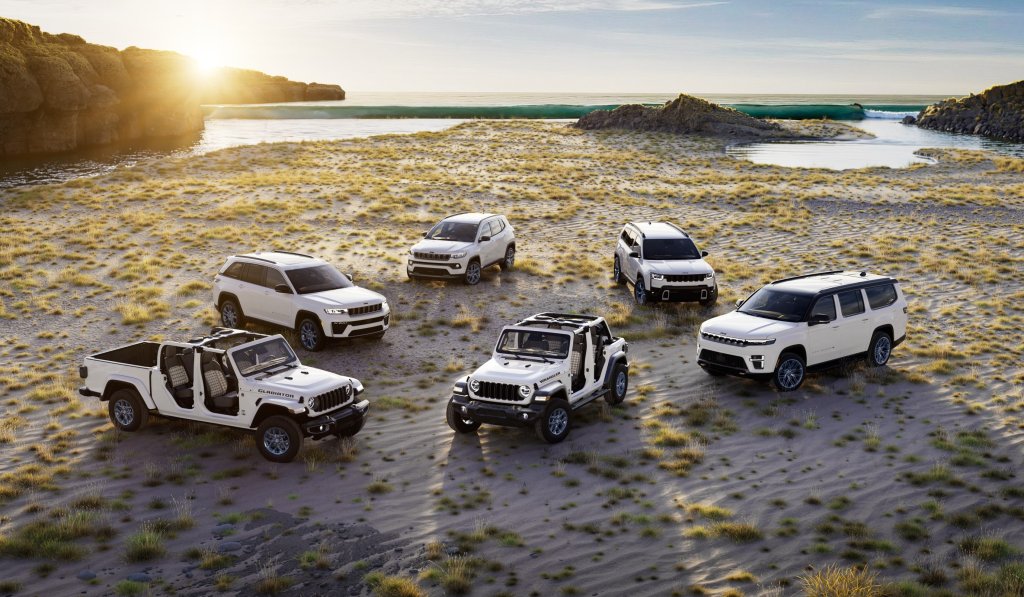
Stellantis is planning to spend a lot of money of the next five years to help it accelerate profit and growth, the company announced May 21.
The company’s FaSTLAne 2030 lays out a five-year plan that will see Stellantis spending 60 billion euros ($96 billion Canadian) on new global platforms, powertrains, technology, to expand the product lineup and to become more efficient, among other efforts.
The company’s troubles in recent years have been well documented, but the company hopes to supercharge its turnaround with this major investment.
“We have great people, the muscle of global scale, unmatched brands that connect and inspire, the deep local roots of our regions and dealer partners to meet our customers’ distinctive needs, and a relentless focus on innovation and excellence in execution. With these strengths, we are uniquely positioned to offer delight, functionality, and affordability. Adding to these the accelerating and amplifying benefits of our ‘win-win’ partnerships, we have everything we need to deliver our FaSTLAne 2030 ambitions,” Stellantis CEO Antonio Filosa said in a news release.
New vehicles
Part of the plan is to overhaul the company’s vehicle lineup, including launching new vehicles and updating existing ones. At the same time, the plan is to maximize capital efficiency by avoiding duplicate spending. In essence, the company plans to produce more vehicles on fewer vehicle platforms that will be scalable.
Stellantis said it plans 60 new vehicle launches and 50 significant refreshes by 2030. Keep in mind, Stellantis is a global brand so many of these vehicles aren’t destined for Canada.
The vehicle launches include 29 battery-electric vehicles, 15 plug-in hybrids or range-extended EVs, 24 hybrids and 39 ICE/mild hybrid vehicles.
Four brands to lead growth
Stellantis said its Jeep, Ram, Peugeot and Fiat brands, all of which have a multi-regional presence, will be the first launchers all-new global products.
The company said 70 per cent of the plan’s brand and product investments will be directed to these brands as well as Pro One, which is Stellantis’ commercial vehicles business.
Other regional brands, including Chrysler, Dodge, Citroën, Opel and Alfa Romeo, will benefit from the global assets that will strengthen the four priority brands, Stellantis said.
Stellantis said DS and Lancia will be managed by Citroën and Fiat, and will be turned into specialty brands.
The automaker plans to strengthen Maserati’s future, with more information to come.
“Every brand in Stellantis will play a clear role in delivering our FaSTLAne 2030 commitments,” said Filosa.
Platforms, powertrains and technologies
The company intends to spend 24 billion euros in global platforms, powertrains and new technologies.
The platforms will be modular to support efficiency. The company plans half of its global vehicle volumes to be produced on three global platforms by 2030.
The company plans to be flexible on powertrains, offering electric and fuel-burning varieties.
The company also intends to launch new technologies, but no technology for the sake of it. Stellantis said each new tech must improve the everyday life of real customers.
Partnerships
Stellantis also announced it is entering, or intending to enter, partnerships with other brands to enhance its competitiveness in different markets.
Brands named for planned collaborations include:
- Leapmotor
- Dongfeng
- Tata
- Jaguar Land Rover
- Applied Intuition
- Qualcomm
- Wayve
- Nvidia
- Uber
- Mistral AI
- CATL
Planned revenue growth
Stellantis’ plan lays out a host of other initiatives, all with the aim to drive growth and reduce production costs.
The company hopes to increase revenue by 25 per cent in North America, by 15 per cent in Europe, by 10 per cent in South America, by 40 per cent in the Middle East and Africa and by around four to six per cent in Asia Pacific.




Leave a comment