
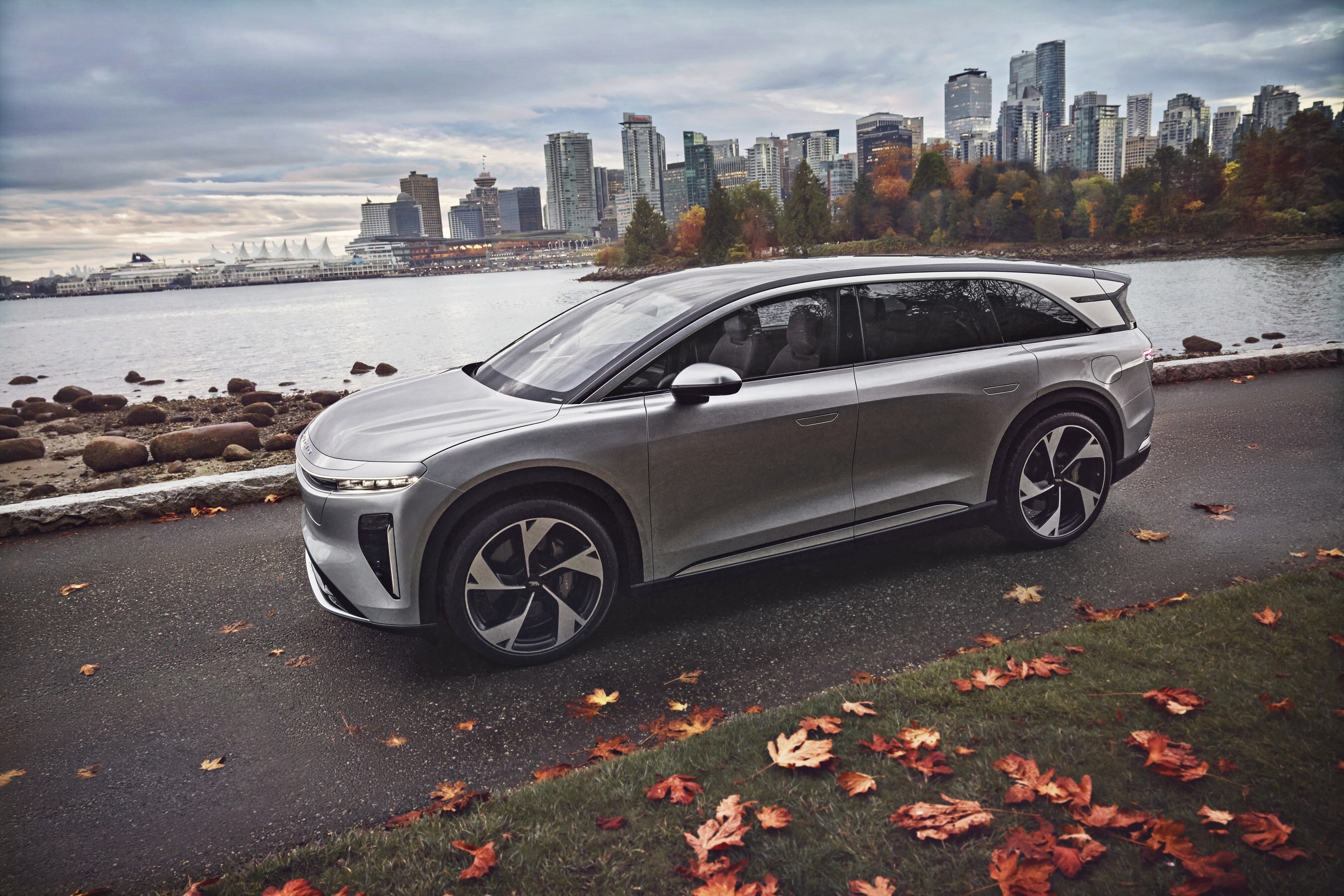
Certain electric vehicles from auto brands such as Lucid, Porsche, Cadillac and others will soon be exempt from Canada’s luxury tax.
In Canada, light-duty vehicles such as cars, SUVs and light trucks that sell for more than $100,000 are subject to a federal luxury tax.
The Canadian government is raising the threshold to $150,000 on electric vehicles. The change was to have started as of Friday, Nov. 13; however, the law must still be approved by Parliament before it can be in effect.
The $150,000 luxury tax threshold would apply to battery-electric vehicles (BEVs), which are aplenty in Canada, and hydrogen-powered fuel-cell electric vehicles (FCEVs), which are few in Canada.
The threshold will remain $100,000 on fuel-burning vehicles, including hybrids and plug-in hybrids.
“With Budget 2026, we are expanding our electricity system, cutting emissions, and unlocking new investment in clean technologies. By updating this measure to reflect today’s vehicle market, we are supporting the transition to a cleaner, more competitive economy,” said François-Philippe Champagne, minister of finance and national revenue, in a news release.
Examples of EVs that will soon dodge the luxury tax
The raised luxury tax threshold can mean big savings for buyers of EVs priced between $100,000 and $150,000.
Porsche
One example, the Porsche Taycan 4S, has a starting price of $148,685, which includes a manufacturer’s suggested retail price (MSRP) of $142,600 plus various fees and levies.
The federal luxury tax adds another $9,737 to the price of the Taycan, according to Porsche’s online configurator.
After the luxury tax is tacked on, the buyer must also then pay a sales tax. And yes, buyers pay a sales tax on the luxury tax.
Lucid
Lucid buyers also stand to benefit from the change on the luxury tax.
The Lucid Gravity SUV, for example, starts at $113,500 and can be more expensive for higher-end trims, making it subject to the luxury tax.
The company’s Air sedan starts at $99,900, but once you select a few options or move up to a higher-end trim level, you’re well over $100,000.
Cadillac
Cadillac EV buyers will also be able to save a few grand on their purchases as well.
The Vistiq, for example, depending on trim selected, can cost more than $100,000, making it subject to the federal luxury tax.
These are just some of the examples of electric vehicles that were subject to a luxury tax but will now, so long as the the price remains under $150,000, be able to skip it, once the law receives parliamentary approval.
How is the luxury tax calculated?
The amount of luxury tax that is applied to vehicles is the lesser of 10 per cent of the full value of the vehicle and 20 per cent of the value above $100,000.
For example, if a vehicle costs $125,000 and if the luxury tax was calculated at 10 per cent of total value, the vehicle would be subject to a luxury tax of $12,500. When calculated at 20 per cent of value above $100,000, the vehicle would be subject to a tax of $5,000. In this example, the lesser tax rate of $5,000 applies.
If the car costs $250,000, then 10 per cent of the total sum would add up to $25,000, while 20 per cent of the sum above $100,000 would equal to $30,000. So in this example, the 10 per cent figure of the total price would be used.
The overlap is at $200,000. At that price, whichever way you slice it, you end up with a luxury tax rate of $20,000.
Someone created a handy online calculator that can help you figure out how much sales tax and luxury tax you can expect to pay, per province, based on the vehicle’s purchase price. You can also add trade-in value, which helps lower the tax obligation. You can find it at canadacartax.ca/calculator.
Canada to spend millions on EV charging infrastructure
The Canadian government said it is committed to supporting the transition to zero-emission vehicles.
As part of Budget 2026, the government will spend $587 million over five years, beginning in 2027-28, to install more than 55,000 EV chargers.
Ottawa said this will roughly double the number of federal government-supported chargers.
The government also plans to spend $45 million over five years, also starting in 2027-28, to pay for research and development for charging infrastructure.




Leave a Reply