
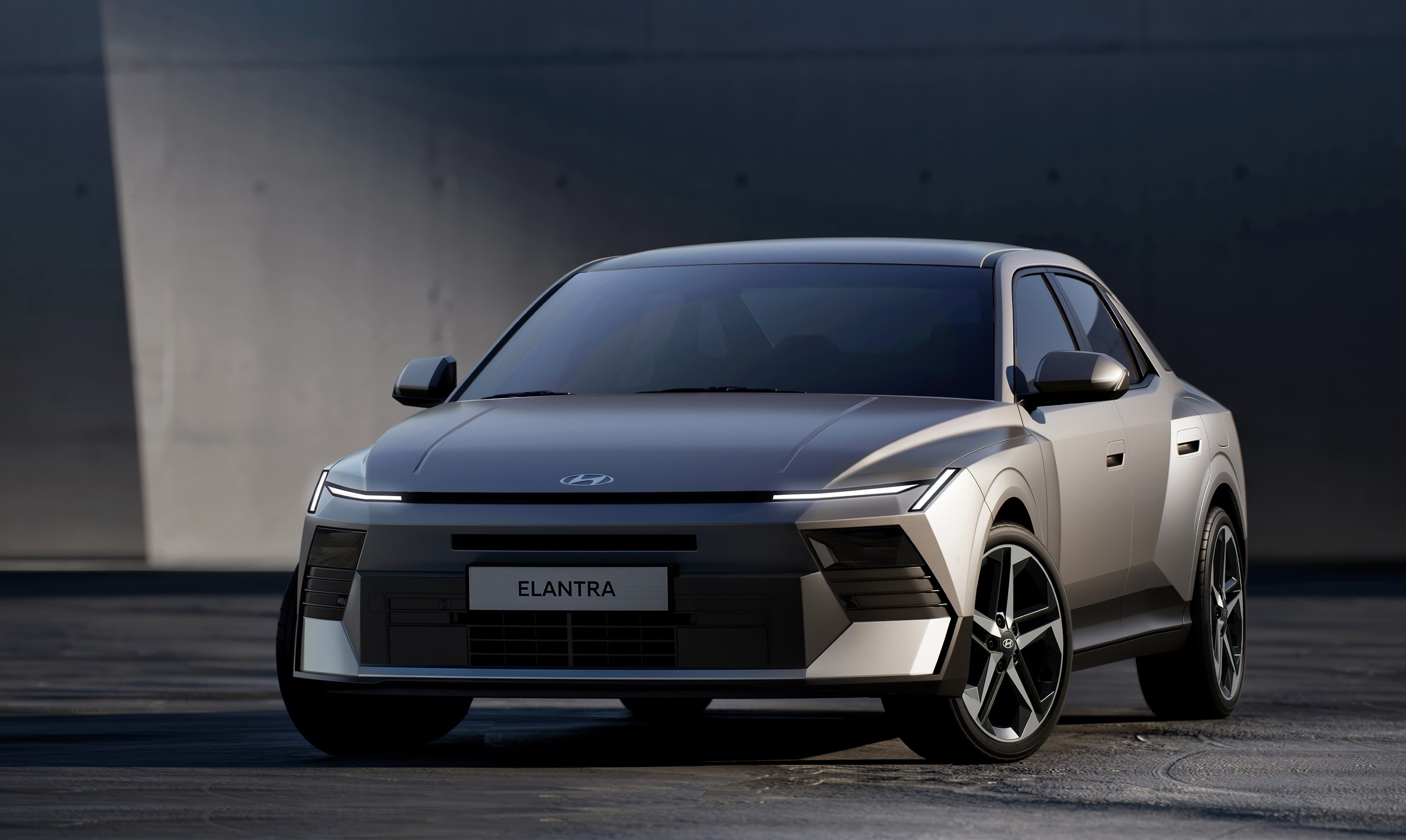
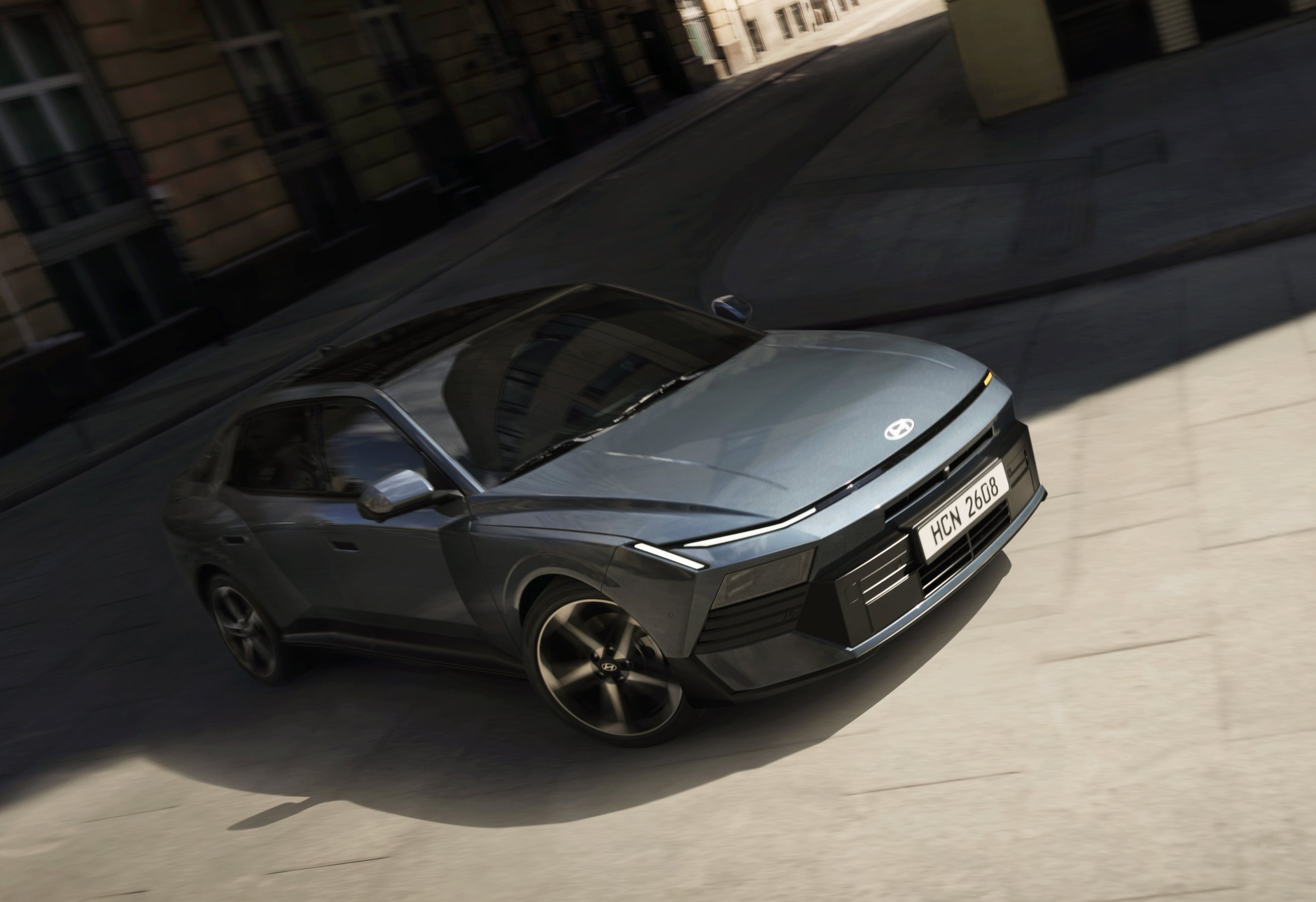
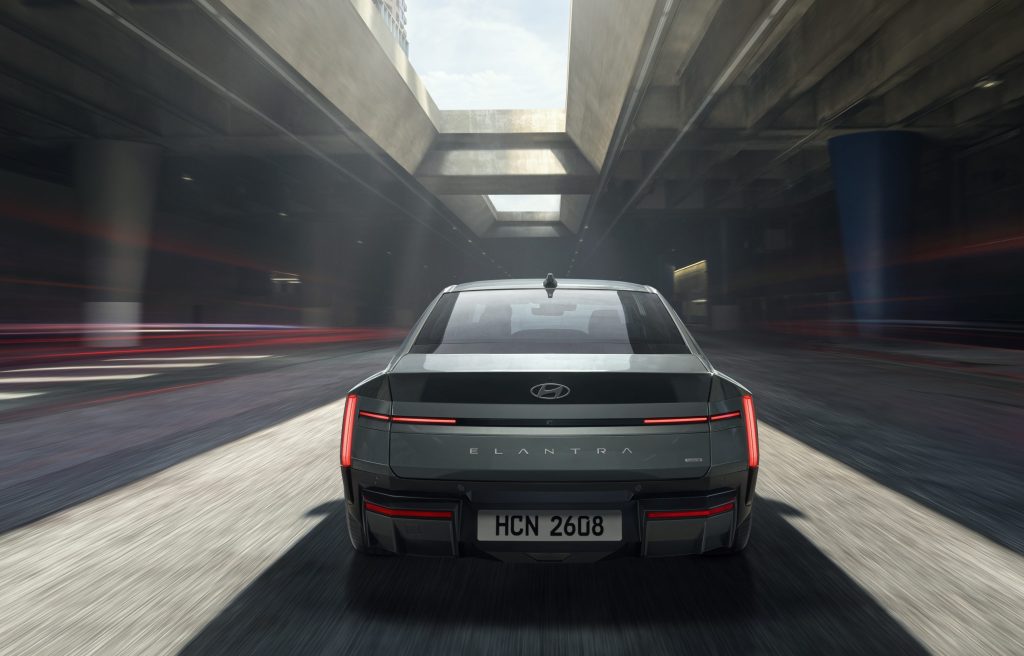
The Hyundai Elantra is leaving behind its edgy, low-profile body proportions of the current generation and picking up the automaker’s new signature look for the next.
The Elantra is becoming boxy with bold proportions.
The shape is based on the automaker’s “Art of Steel” design language, that also appears on the recently revealed Tucson SUV.
The eight-generation Hyundai Elantra is launching for the 2027 model year while a hybrid version will join it for 2028.
Hyundai revealed the all-new version of its popular car on Nov. 19.
“For many customers, Elantra is their first experience with the Hyundai brand, and that makes this vehicle especially important to us,” said José Muñoz, president and CEO of Hyundai Motor Company, in a news release.
“The all-new Elantra demonstrates that an attainable sedan does not have to compromise on design, technology or everyday usability. We want that first Hyundai experience to be one that builds trust and keeps customers with our brand for years to come.”
More on the design
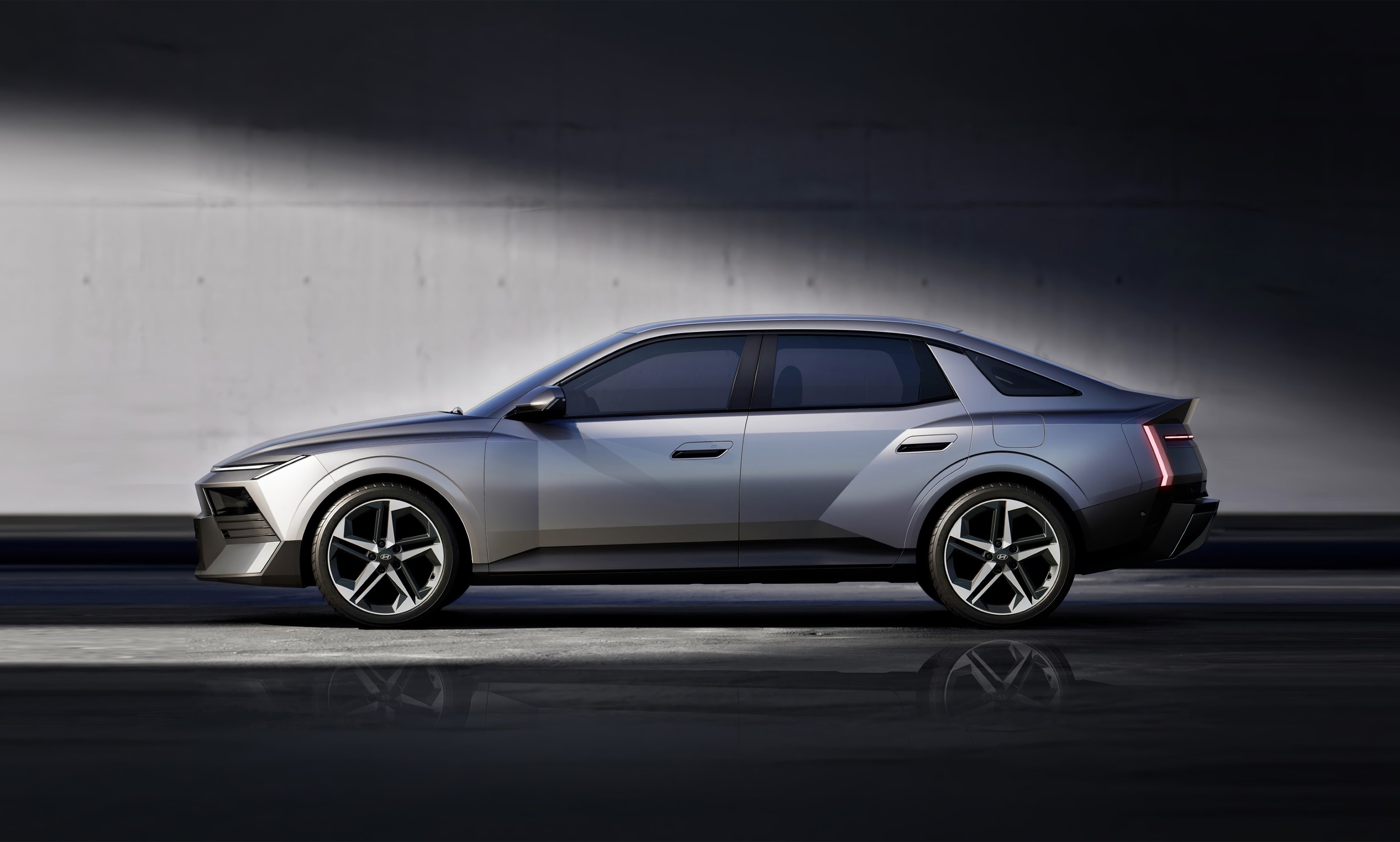
The next-gen Elantra is not only boxier, it’s also bigger than the outgoing model.
Length is growing by 85 mm to 4,795 mm, width is increasing by 30 mm to 1,855 mm, the height is increasing by 10 mm to 1,425 mm, and the wheelbase is extended by 30 mm to 2,750 mm.
It’s boxy yes, yet relatively aerodynamic with a drag coefficient of 0.26 Cd.
Hyundai promises midsize space for rear seats
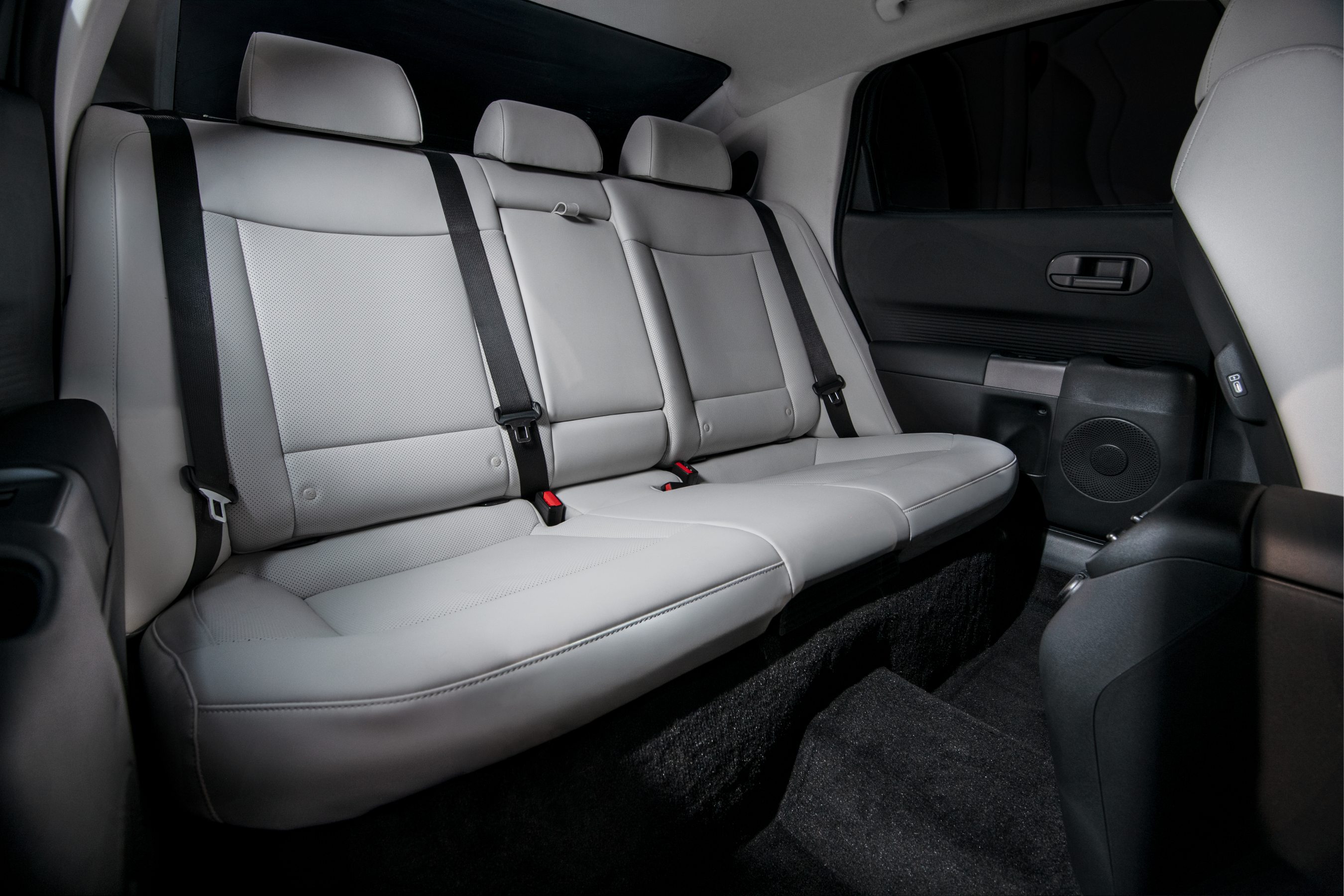
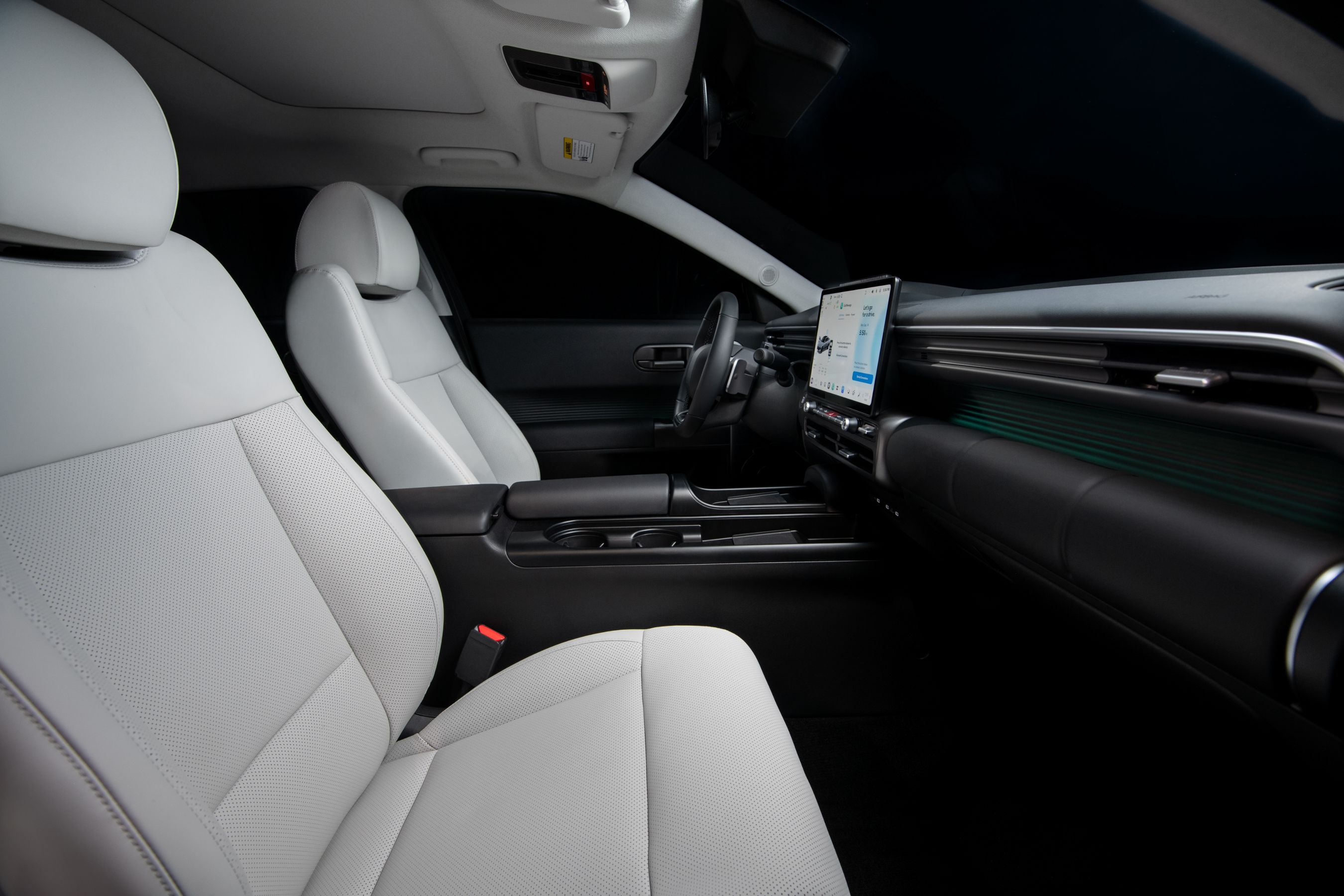
The car is in the compact segment, that’s not changing, but Hyundai promises generous rear-seat space, matching that of midsize models.
Rear legroom is growing to 993 mm and rear headroom gets 958 mm of space. Additionally, rear shoulder space grows to 1,435 mm.
Hyundai said that is best-in-class rear-seat space.
Helping increase space for rear-seat occupants are new front seats with slimmer frames.
Rear-seat comfort is further enhanced with second-row HVAC vents.
There are also USB-C charge parts for the rear.
ICE powertrain updated
The Elantra is powered by a 2-litre Atkinson-cycle four-cylinder engine with an estimated 147 hp. The engine is updated from the existing one to now feature improvements to thermal management, oil delivery, and ignition.
The engine is mated with an intelligent variable transmission, which has also been updated to offer a wider ratio range and reduced internal friction, which Hyundai said supports a more efficient and quieter operation.
Hyundai is targetting a city-highway combined fuel economy rating of 6.7 L/100 km on models equipped with 16-inch wheels. That’s an improvement from the 6.9 L/100 km of the outgoing Elantra and 6.8 L/100 on models equipped with a start-stop feature.
Hybrid powertrain arriving for 2028
Buyers hoping for the hybrid will have to wait as that model won’t arrive until the 2028 model year.
Hyundai is promising several improvements compared to the current hybrid-powered Elantra.
Hybrid models get a 1.6-litre engine paired with a six-speed dual-clutch transmission and an electric motor.
The e-motor’s power is increased to 45 kW from 32 kW and the high-voltage battery supplying energy for it is increased in capacity to 1.49 kWh from 1.32 kWh.
The system power output is rising to 155 hp, up from the current 139 hp.
Hyundai is also targetting a city-highway combined fuel economy rating of 4.4 L/100 km. The outgoing model manages 4.7 L/100 km.
The car’s Smart Regenerative Braking 3.0 system allows the driver to select the regenerative braking level via steering-wheel paddles. At the max level, lifting your foot off the accelerator pedal will bring the car to a complete stop, similar to the one-pedal driving feature of electric vehicles.
Electronics can run up to 30 minutes with engine off
The hybrid Elantra gets a Stay Mode, which allows the car’s various electronics systems, such as the climate control, audio, lighting, charge ports, and more, to operate for up to 30 minutes without the engine running. The system uses energy stored in the hybrid battery while the car’s parked.
Pleos Connect arrives on Elantra
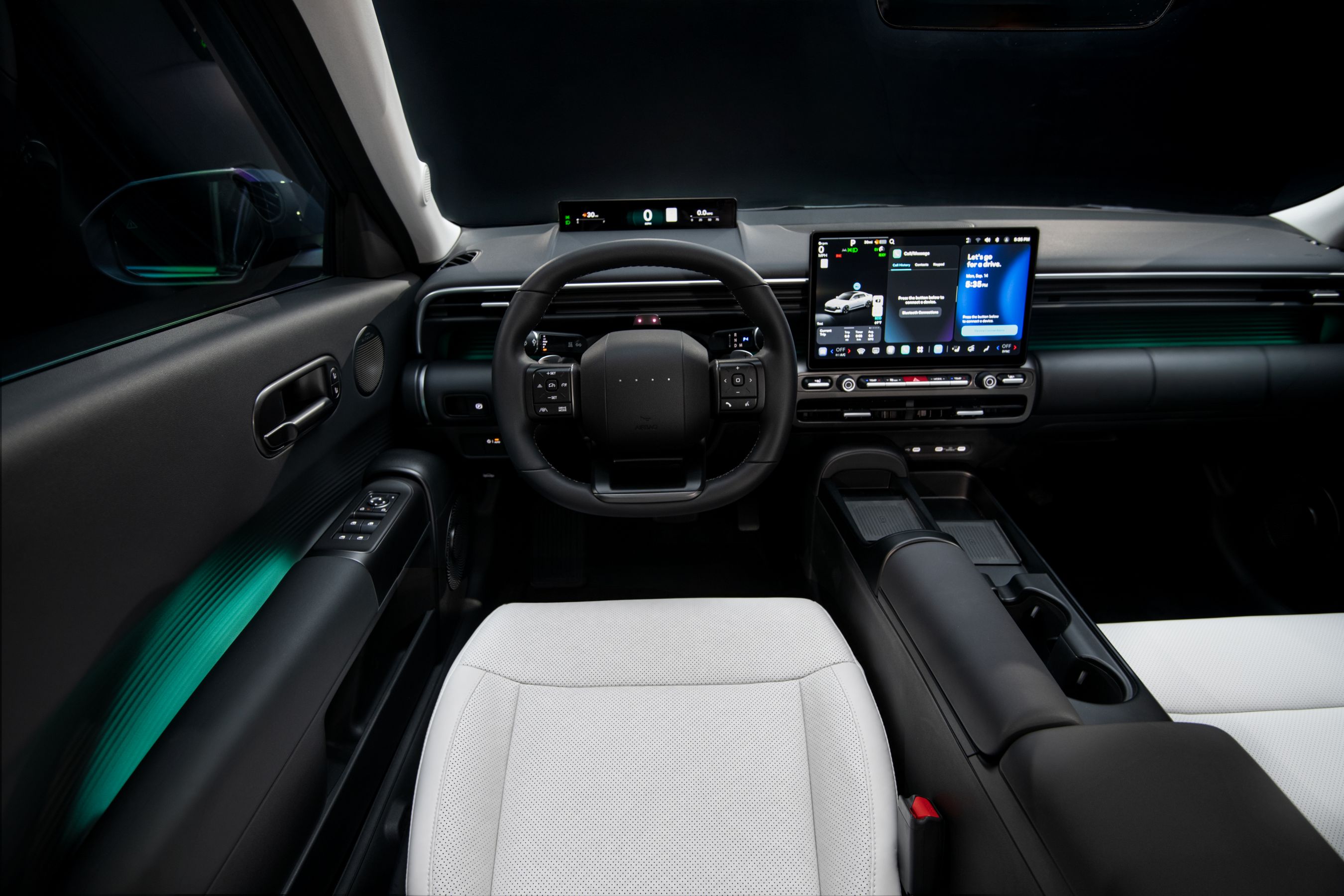
The automaker’s next-generation infotainment system, Pleos Connect, is arriving on the next-gen Elantra.
The system is based on Android Automotive OS and allows occupants to interact with the system via a natural-voice digital assistant.
The system can also take over-the-air updates.
Best of all, Hyundai is maintaining physical controls for frequently used features.
The car has a standard 12.9-inch centre screen or a 14.6-inch screen on higher-end trims.
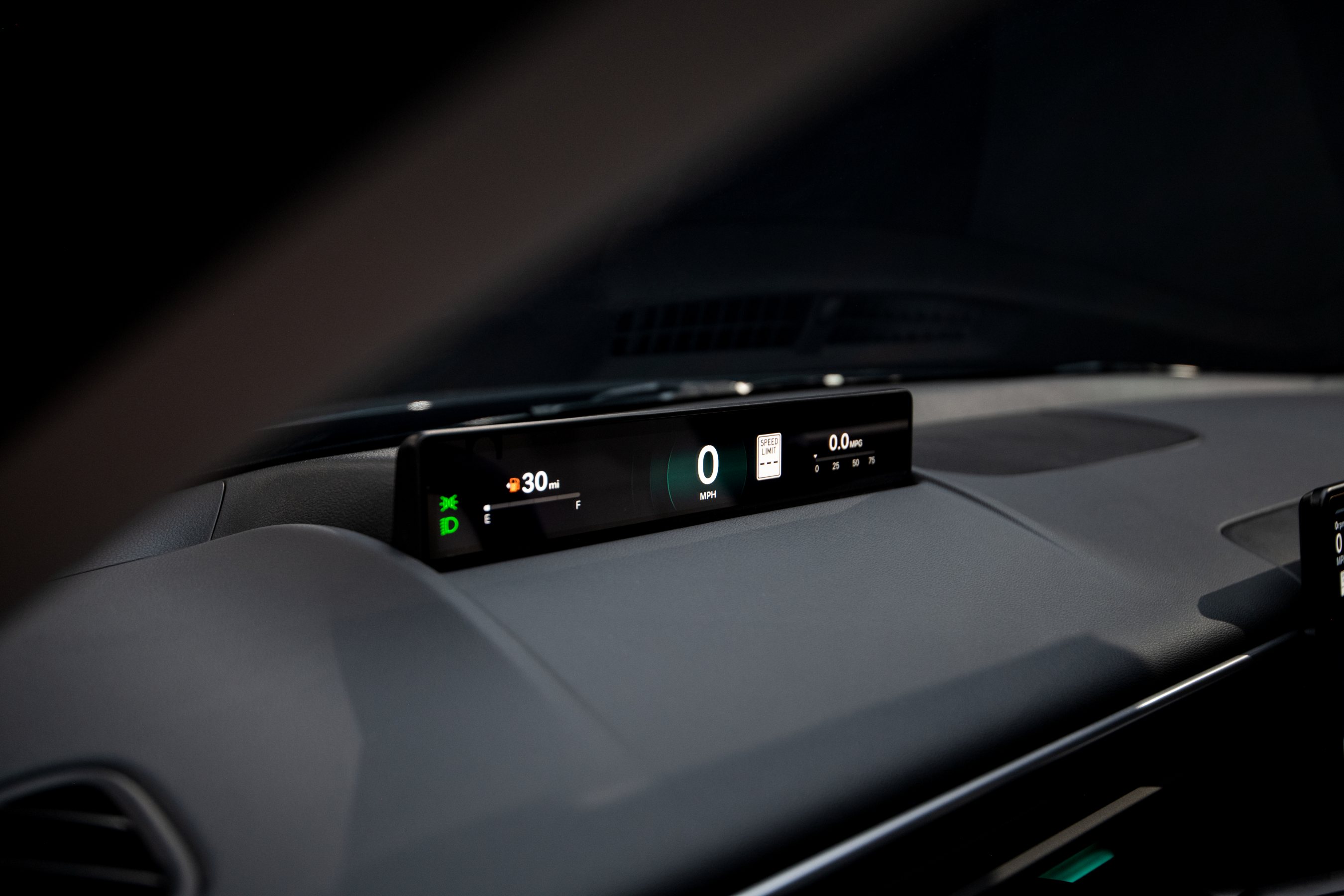
The traditional driver gauge has been redesigned to now offer a 9.9-inch slim information display more at the driver’s eye level above the steering wheel.
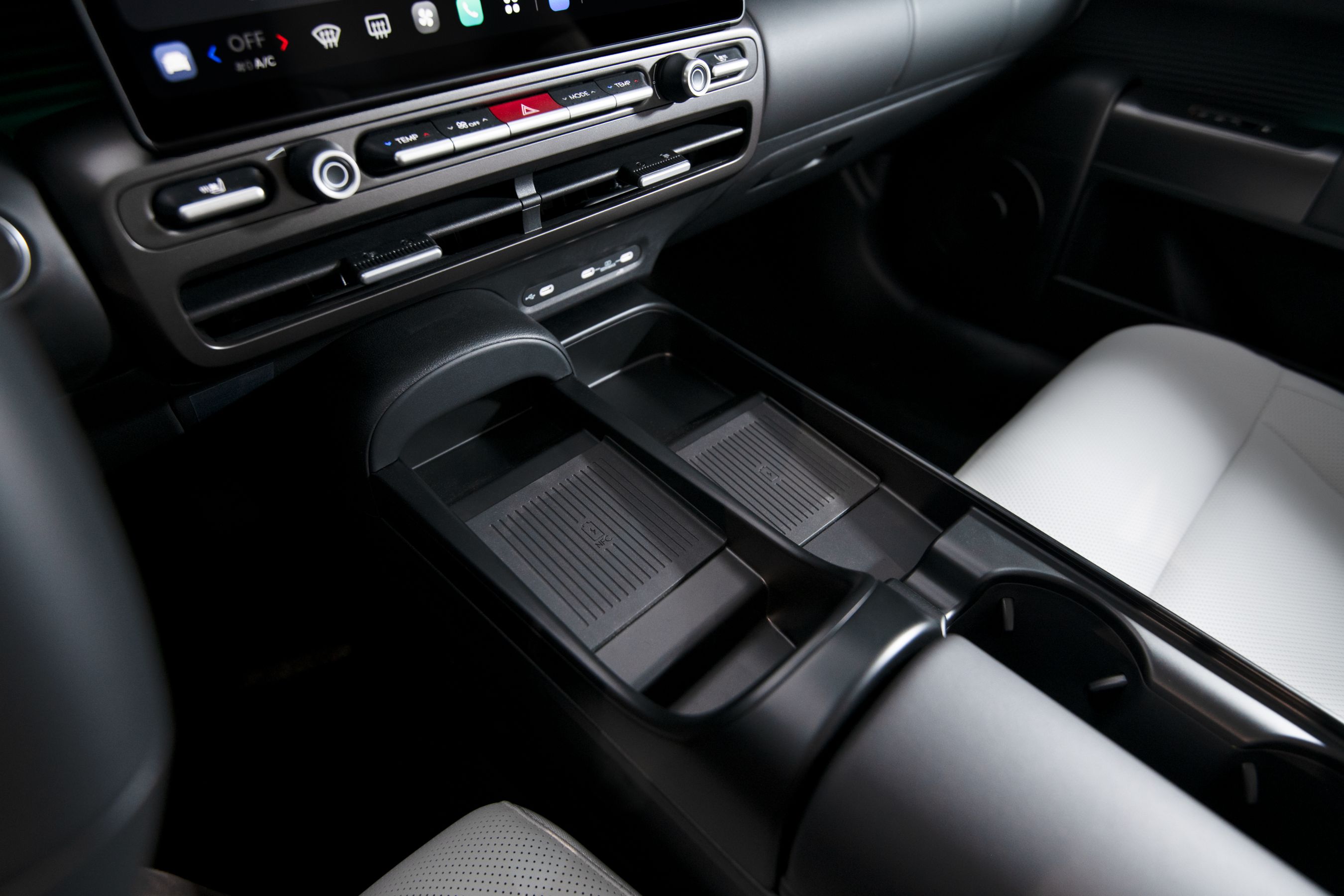
Other interior tech features include a pair of front USB-C charge ports, rear USB-C charge ports, dual wireless charging pads up front and a separate USB-C data port.
What’s more, the Elantra punches above its class with an available Bang & Olufsen audio system with 12 speakers.
Lots of safety features
The 2027 Elantra and 2028 Elantra Hybrid get the Hyundai SmartSense suite of safety and driver-assistance systems.
Depending on trim, features may include:
- Forward Collision-Avoidance Assist with Pedestrian, Cyclist, Junction-Turning, and Direct Oncoming Detection
- Blind-Spot Collision Warning
- Rear Cross-Traffic Collision-Avoidance Assist
- Lane Keeping Assist with haptic-feedback warning
- Safe Exit Warning
- Smart Cruise Control with Stop & Go
- Driver Attention Warning
- High Beam Assist
- Rear Occupant Alert
- Rear Seat Belt Reminder
- Hands-On Detection
- Rearview camera with dynamic guidelines
- Forward and Reverse Parking Distance Warning
- Driver Monitoring System
Canadian availability
Canadian pricing, market timing and more have not been announced.
For updates, visit the Hyundai Canada website.





Leave a Reply