

Koenigsegg Automotive AB founder Christian von Koenigsegg had always wanted his company to compete in the GT1 endurance racing, the FIA’s top-tier racing class.
The company’s first CC road car prototype was created to fit the GT1 class regulations, so that the company wouldn’t need to make drastic changes to enter the racing series.
The company’s first cars, the CC8S and CCR, each fit the dimensions of the series.
Then the company created the CCGT, a GT1 class race car.
But before the car could ever compete in a single race, the GT1 class series was scrapped and so the dream died.
Only one CCGT was built.

Tribute car
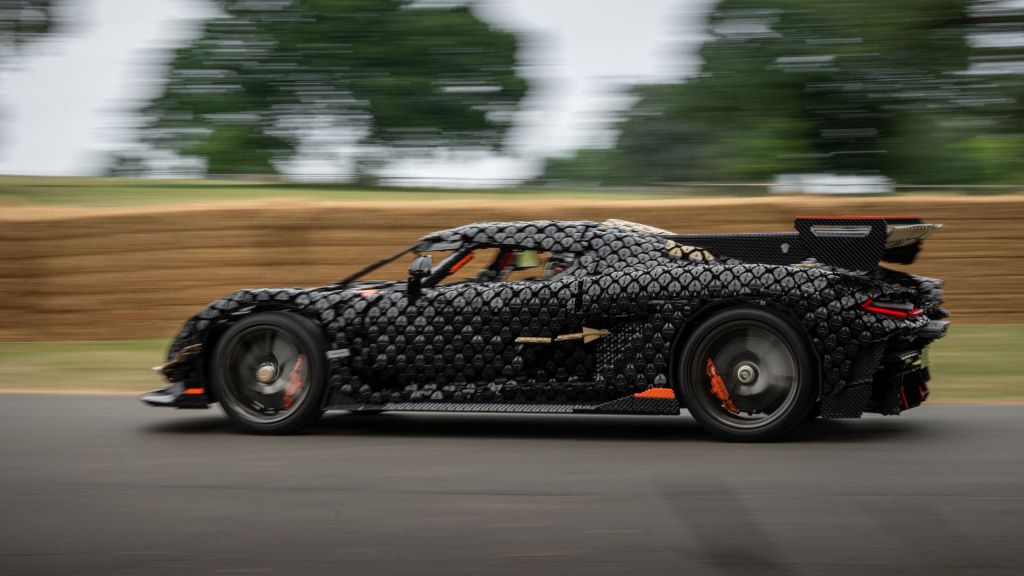
While the CCGT will never race, except in a GT1 historic class race, Koenigsegg built a tribute to the race car that was never given a chance to compete.
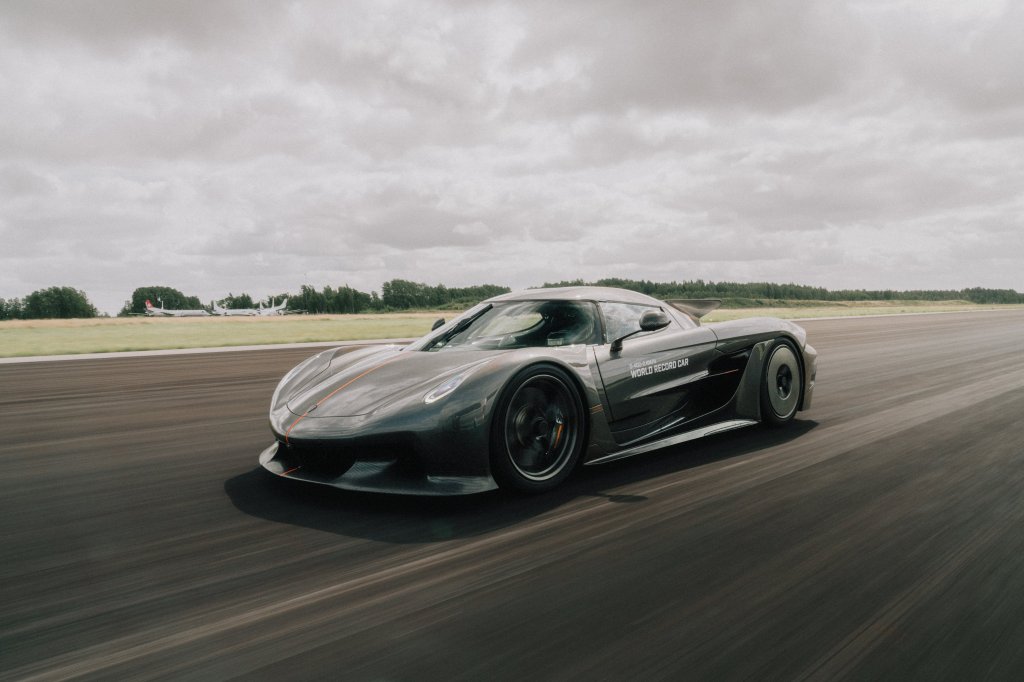
The automaker revealed the CCGT1. It is a road-going limited-edition car based on the CC850.
The car is limited to just 70 units and each one was already spoken for before the CCGT1 was even publicly unveiled.
CCGT1 powertrain
The CCGT1 is powered by Koenigsegg’s twin-turbo V8 powertrain, which powers pretty much every car the company produces today.
The powertrain produces 1,262 hp when using gasoline or 1,578 hp on E85 biofuel.
The car comes standard with the company’s Light Speed Transmission gearbox with sequential shifting or can be optioned with a gated six-speed manual transmission.

Racing-derived downforce
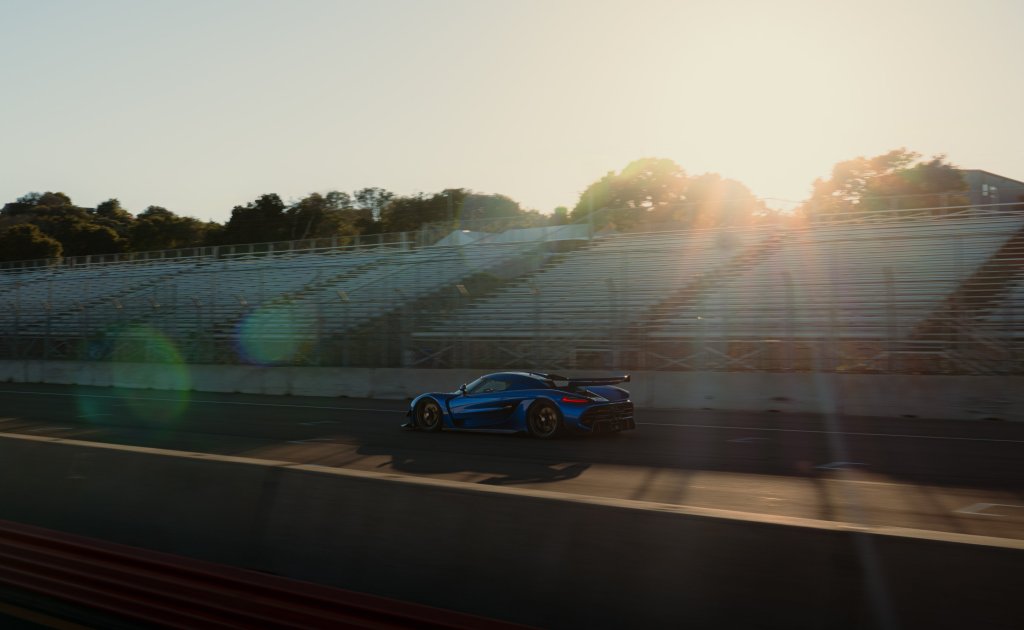
Inspired by a race car, the CCGT1 acts like a race car.
Koenigsegg said the car has racing-derived aerodynamics, which generate up to 800 kilograms of downforce at 250 km/h. That puts the CCGT1 between Koenigsegg’s Jesko Attack and Sadair’s Spear cars for peak downforce.
The car’s rear wing has up to 30 degrees of automatic adjustment so it can offer low-drag, air-brake and high-downforce modes without driver input.

Track package
The car is road legal; however, Koenigsegg is offering its first-ever, factory-designed track package as an option.
The option includes slick tires, a carbon roll cage, racing seats, air jacks, data logging and more.

Ghost Fibre
Back in 2009, the automaker revealed a white carbon fibre that took Koenigsegg years to develop. The automaker admits it’s difficult to execute, so Koenigsegg ended production back then.
However, clients have been asking for it, so Koenigsegg created a new version of it called Ghost Fibre.
Koenigsegg said the carbon-fibre material offers shimmering beauty and functionality.
The company said it adds toughness to the car’s body panels and sound deadening. It also allows body panels to be lighter compared to traditional carbon fibre.
Koenigsegg describes the result as “something akin to a crystal-white aramid/carbon matrix, finished with the signature precision of a perfect Koenigsegg weave, while adding lightness.”

Race-ready cockpit
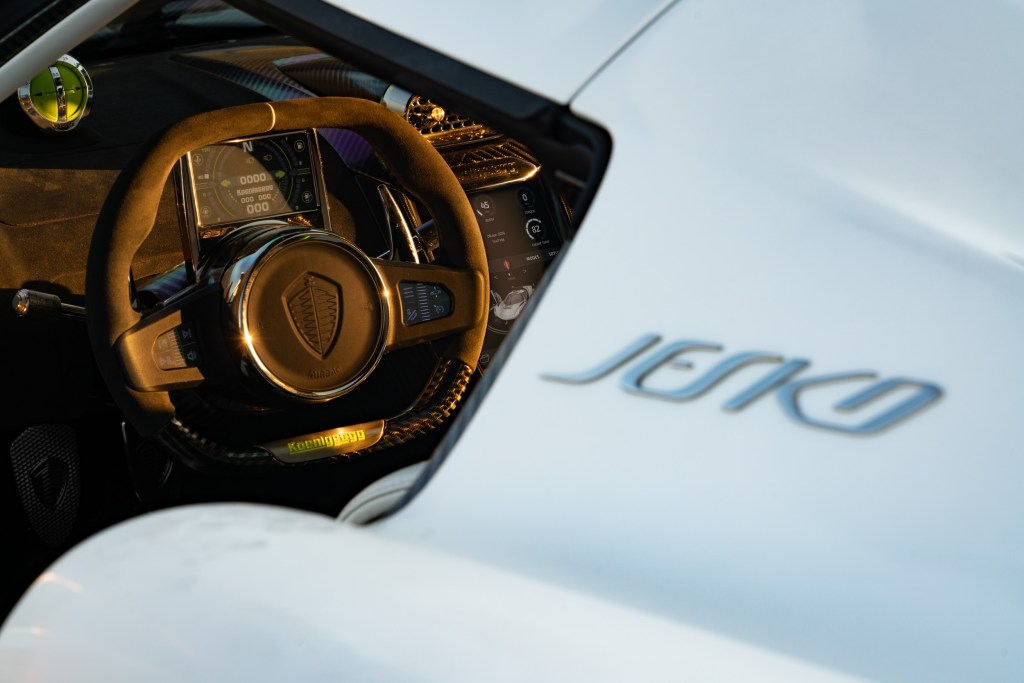
The car has a race car-inspired cockpit. The driver sits low, and the interior features a covered ignition switch, a toggle to prime the fuel pumps and a red starter button.
Koenigsegg’s third-generation Chronocluster puts everything the driver needs directly in their view. The cluster includes an analogue G-meter, which is powered entirely by G-force and no electrical connection, sitting at the centre of the cluster.
Standard seats are lightweight carbon-fibre units, with a six-point harness for the driver. The optional track package adds racing seats and six-point harnesses for both occupants, as well as a race-grade fire-suppression system.

“The CCGT1 has two clear identities. On the road, it’s a sublime tourer that is both comfortable and incredibly capable. But its origins are rooted in endurance racing, and that’s where the CCGT1 reveals its full character as a true celebration of the original CCGT – with the roof panel on or off,” Christian von Koenigsegg said in a news release.
Full model details are available on the Koenigsegg website.


Leave a comment