

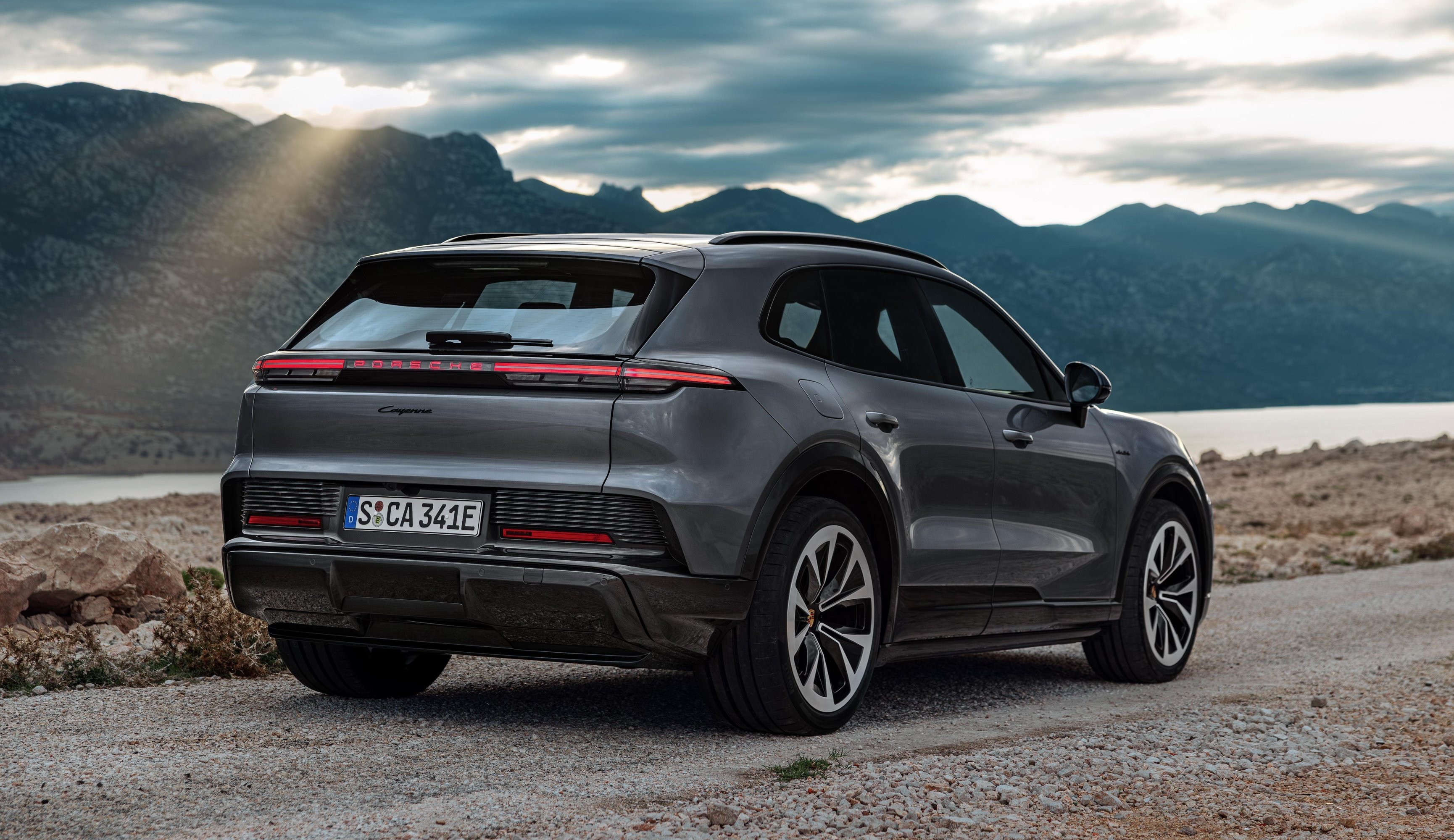
The long-anticpated and long-teased Porsche Cayenne Electric is here, and the top-dog Turbo model is the company’s most powerful vehicle yet.
The electric SUV has launched for the 2026 model year, and it’s already available to order in Canada.
So, let’s get straight to the goods, the power figures.
Porsche typically offers its vehicles in a variety of performance levels, and when a new model launches, the company usually offers a few versions and adds more in successive months and years.
At launch, the all-new Cayenne is available in two flavours.

Power output
There’s the base Cayenne Electric with 435 hp (300 kW) in launch control, or 402 hp in normal mode.
And then there’s the Cayenne Turbo Electric with a wild 1,139 hp (850 kW) in launch control, or 845 hp in normal mode. What’s more, in launch control, the Turbo model gets 1,106 lb.-ft. of torque.
All-wheel drive with electronic Porsche Traction Management is standard.
Performance figures
Porsche offered some performance figures for both models.
Cayenne Electric:
- Zero to 100 km/h – 4.8 seconds
- Zero to 200 km/h – 18.4 seconds
- Top speed – 230 km/h
Cayenne Turbo Electric:
- Zero to 100 km/h – 2.5 seconds
- Zero to 200 km/h – 7.4 seconds
- Top speed – 260 km/h
Charging and recuperation
Both versions have a 113-kWh gross capacity battery pack on 800-volt technology with a maximum charging speed of 390 kW. Keep in mind, in Canada, public Level 3 charging stations typically max out at a little over 300 kW. Porsche said at speeds of 150 kW, the Cayenne Electric will recharge from 10 to 80 per cent in 26 minutes. That time would be cut to 16 minutes if you could find a charger capable of the Cayenne’s maximum charging rate.
The Cayenne Electric also generates its own energy through recuperation during braking.
Thanks to technology developed for Formula E, the Cayenne Electric is capable of up to 600 kW of recuperative power. Porsche said as much as 97 per cent of all braking can be handled by the electric motors and that the SUV’s mechanical friction brakes rarely need to kick in.
The SUV is also the first Porsche with inductive charging, which is available as an option.
The system allows wireless charging, via a floor plate, at speeds up to 11 kW.
Range
Porsche provided estimated range in WLTP standards, which are typically observed in Europe.
The Cayenne Electric is estimated at 642 kilometres of range and the Turbo at 623 kilometres. North American standards are tougher so those figures would likely be lower under EPA/NRCan rules.
Towing capacity is rated at up to 3,500 kilograms.

Aerodynamics
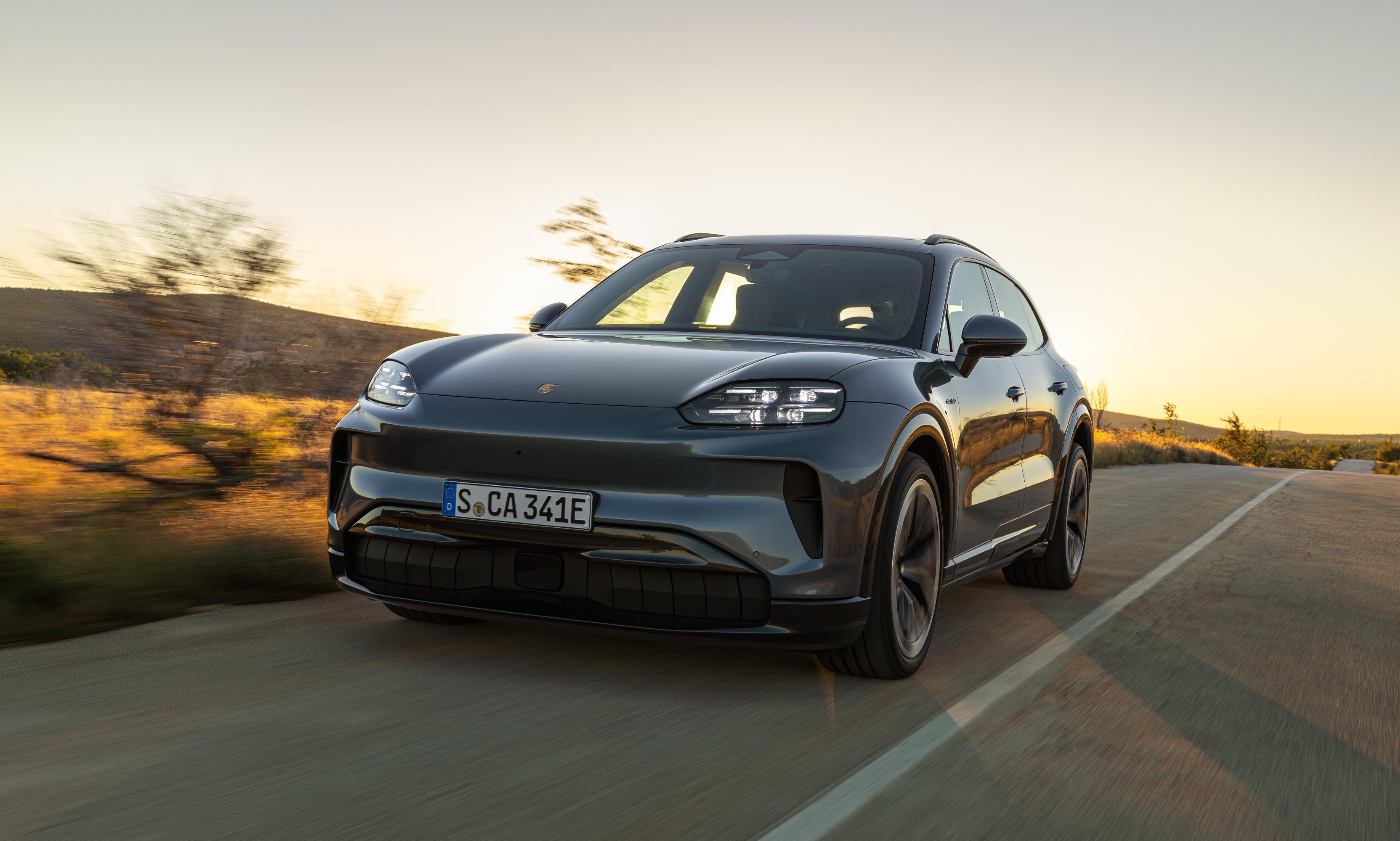
Porsche manages to get a drag coefficient of 0.25, which is quite astounding for an SUV. That figure even competes with some of the most aerodynamic electric sedans you can currently get.
The SUV has an active aerodynamics system that adapts the vehicle to its driving situation and speed. The system can also increase downforce.
The Turbo version also gets active aeroblades at the rear. These aeroblades improve air flow, particularly at higher speeds.
Size
The Cayenne Electric is 55 millimetres longer than the gasoline-burning Cayenne.
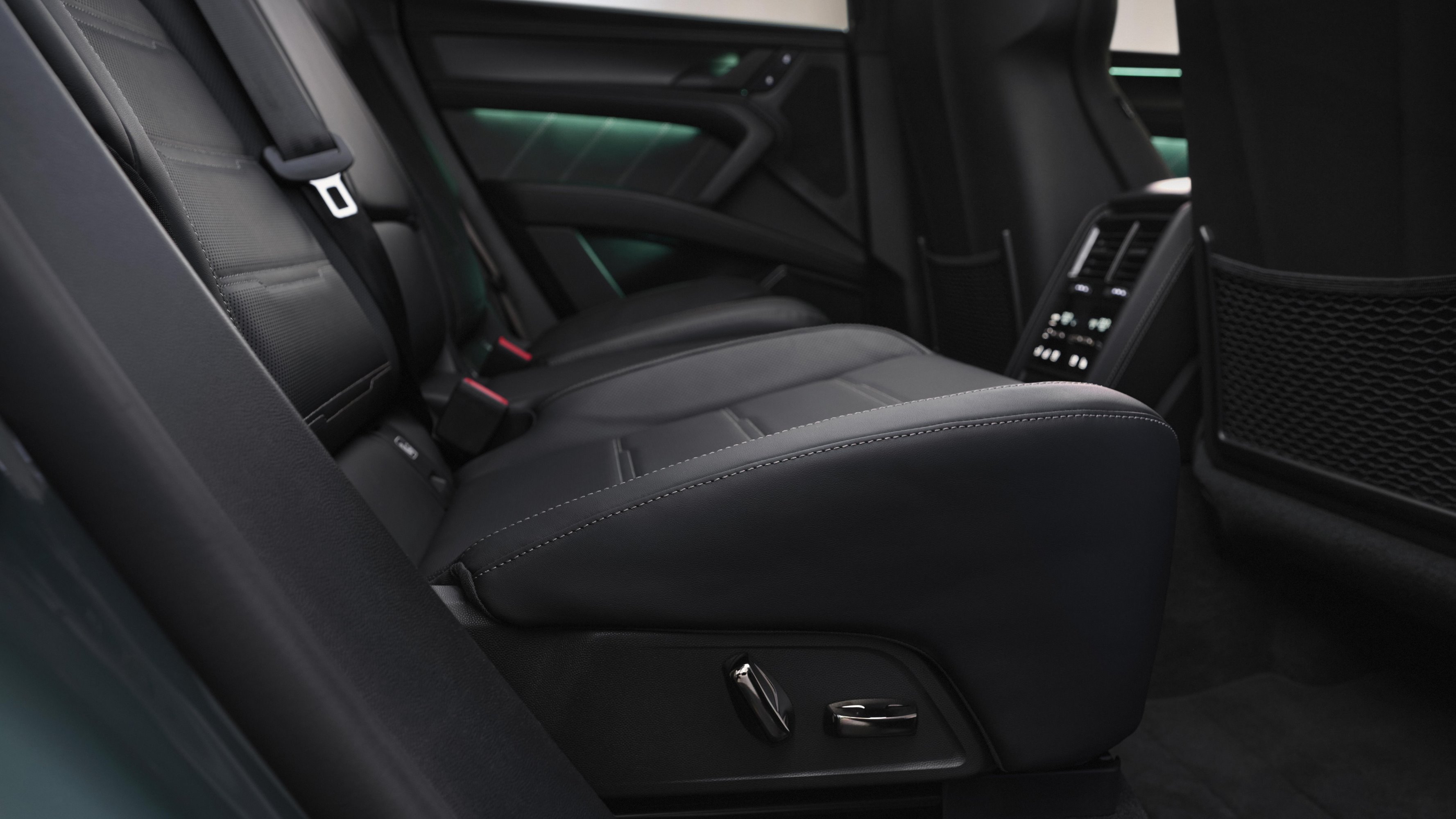
It measures 4,985 mm long, 1,980 mm wide and 1,674 mm high. The wheelbase has been increased by nearly 13 centimetres, which results in more legroom for the rear seats and improved comfort levels.
The rear seats are electronically adjustable, and offer adjustments for more rear-seat comfort or cargo space, depending on the need.
Porsche said the Cayenne Electric’s luggage capacity ranges from 781 to 1,588 litres, plus there are another 90 litres in the frunk.
Porsche has also created a watch that Cayenne customers can also order to match their SUV. The timepiece is made by Porsche’s own Swiss watch manufacturer and is tailored to the Cayenne Electric’s vehicle.

Screens galore
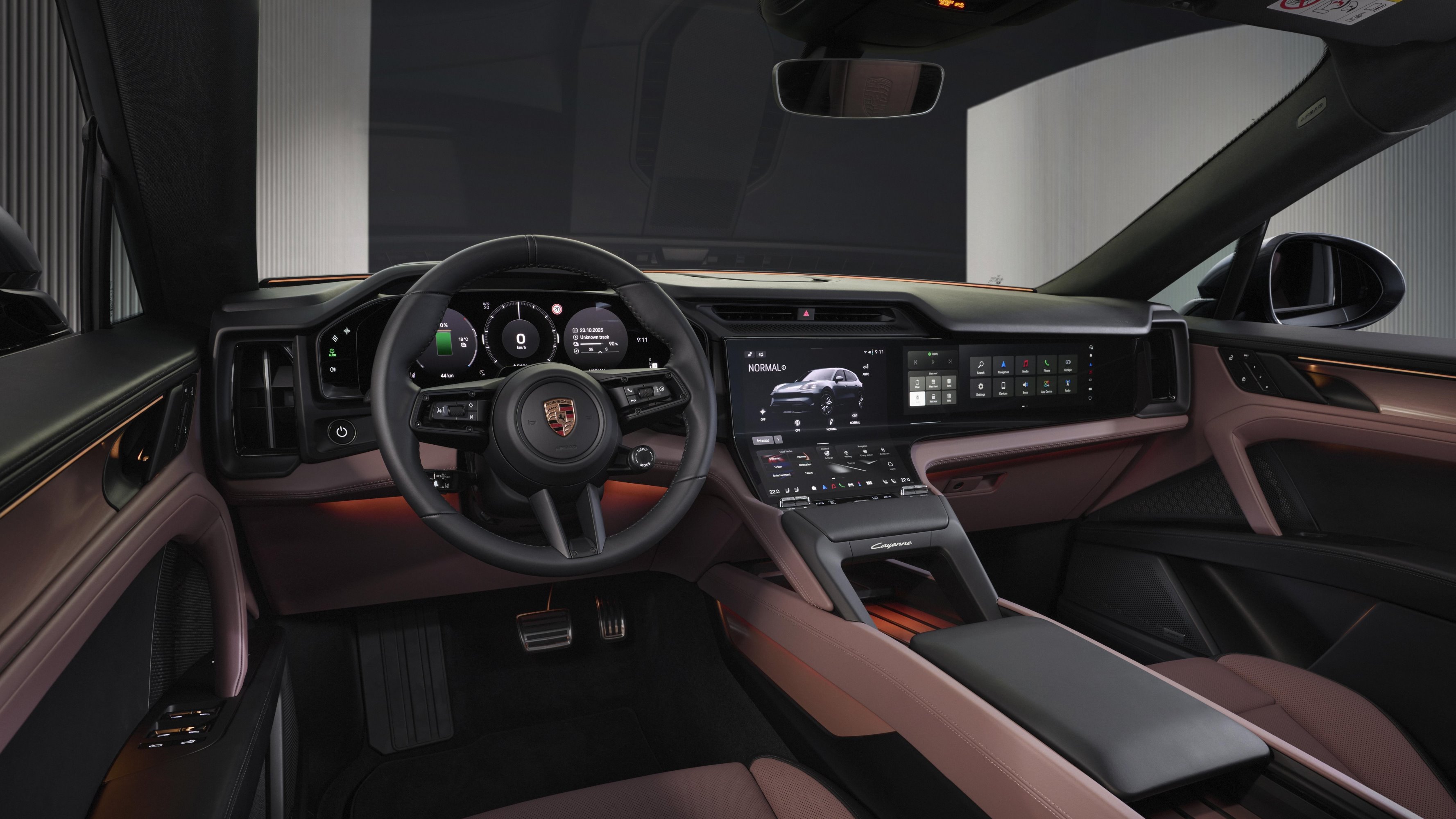
It would be hard to ignore the fact the Cayenne Electric now has the largest digital screen area of any Porsche.
The OLED digital gauge cluster measures 14.25 inches, the optional passenger display measures 14.9 inches, plus there’s a folded central infotainment display, which Porsche calls a Flow Display, and there’s an optional head-up display.
With all available displays selected, the total screen area measures 87 inches, Porsche said.
“The Cayenne Electric shows performance in a completely new dimension, with innovative technologies that we have developed in motorsport. It sets new standards in the SUV segment – in terms of driving characteristics as well as charging,” Porsche chairman Oliver Blume said in a news release. “Outstanding electric performance meets very real everyday usability. Excellent long-distance comfort combines with uncompromising off-road capability.”

Canadian pricing
Starting Canadian pricing is as follows:
- Cayenne Electric – $144,562 (MSRP of $131,300)
- Cayenne Turbo Electric – $200,962 (MSRP of $178,300)
The prices reflect the MSRP, plus estimated fees, levies and luxury tax.
Porsche said the new electric Cayenne will be offered alongside internal combustion engine and hybrid versions beyond 2030.
Full model details are available on the Porsche website.


 Empty Tank
Leave a comment