

Volvo, the car company that introduced the modern three-point seatbelts to the world, has unveiled an even more advanced version, which it calls a major safety improvement to the safety belt.
The automaker has launched a new multi-adaptive seatbelt it says is intended to further enhance safety for everyone in real-world traffic situations.
Volvo did not invent seatbelts, but it made them widely used in automobiles. The first seatbelts were used in 19th century aircraft, according to the History Channel, but as automobiles became more common in the 20th century, so did crashes. A few companies created different versions of seatbelts, but none were popular and few people used them.
Then, Nils Bohlin, who previously worked in aviation and was then chief safety engineer at Volvo, developed the three-point lap and shoulder seatbelt, which was introduced in 1959.
By 1968, all new American vehicles were required to have the three-point seatbelt, according to the History Channel.
In Canada, seatbelt requirements were launched by individual provinces, starting with four provinces in 1977. By 1987, all provinces required them and by 1991 so did all territories.
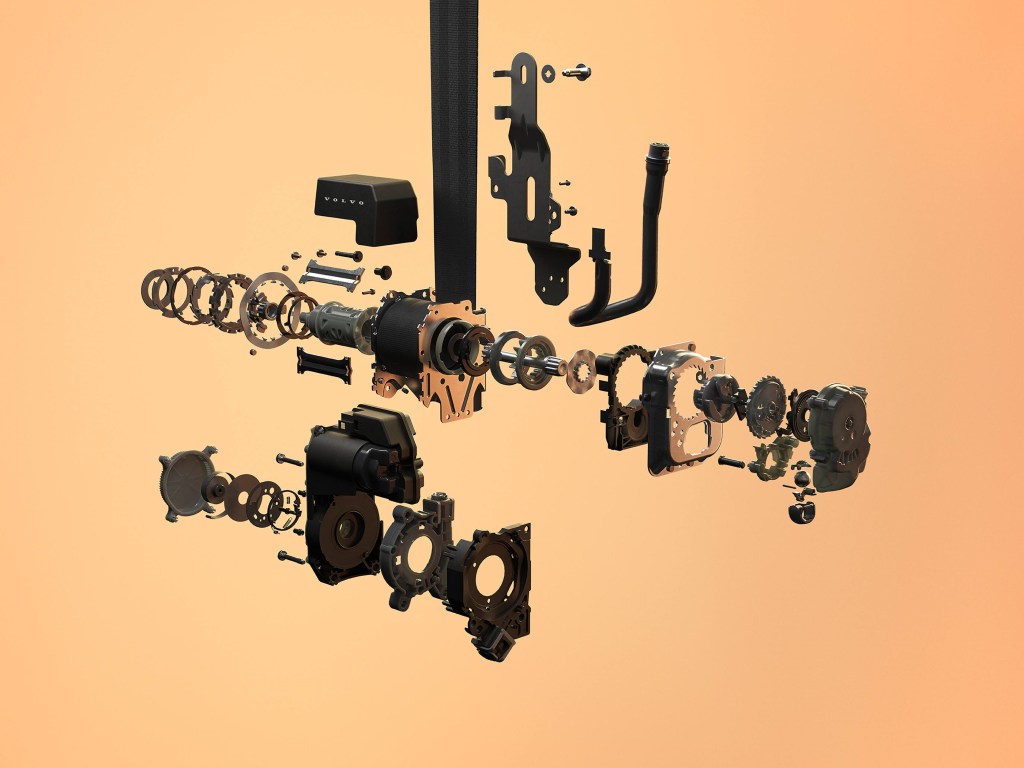
How new seatbelts work
Today, Volvo is revolutionizing the seatbelt again, with the new multi-adaptive versions being introduced on the all-electric 2026 Volvo EX60.
Volvo said the new seatbelts can use data input from interior, exterior and crash sensors to customize protection for the occupant. They can adapt based the occupant’s profiles, including their height, weight, body shape and seating position, and based on the situation of the crash, such as direction, speed, and passenger posture.
Volvo said, as an example, large occupants in a serious crash would receive a higher belt load setting to reduce the risk of head injury, while smaller occupants in a milder crash would receive a lower belt load to reduce the risk of rib fractures.
The company said this is done by load-limiting profile variations, which manage the force applied in the event of a crash. Volvo added the system will improve over time as it will receive over-the-air software updates.
“The world first multi-adaptive safety belt is another milestone for automotive safety and a great example of how we leverage real-time data with the ambition to help save millions of more lives,” said Åsa Haglund, head of Volvo Cars Safety Centre, in a news release. “This marks a major upgrade to the modern three-point safety belt, a Volvo invention introduced in 1959, estimated to have saved over a million lives.”





 Empty Tank
Leave a comment