
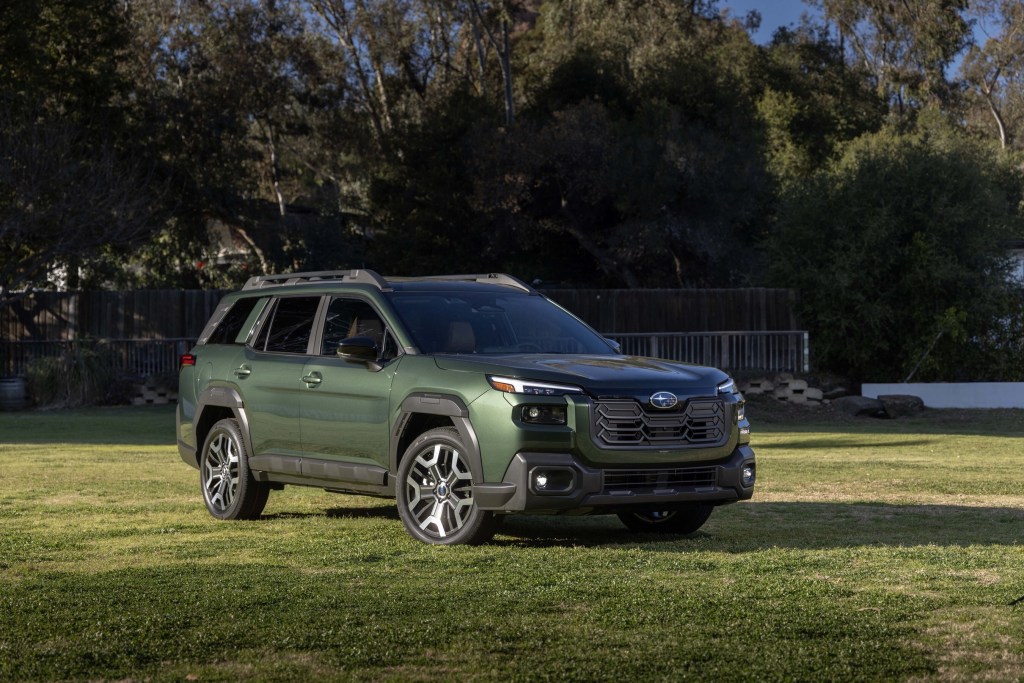
It’s probably safe to now call the Subaru Outback an SUV.
The car began life, some decades ago, as a station wagon version of Subaru’s Legacy midsize sedan and later became its own model with a raised roof and higher ground clearance, straddling the line between car and sport utility vehicle.
Now, Subaru has unveiled an all-new Outback for the 2026, which sheds its raised wagon shape and becomes more SUV than car.
The newly launched seventh-generation Outback is taller and boxier than the outgoing model. There’s also a new Wilderness version, which we’ll get to further down.
For now, let’s start with the regular outback.
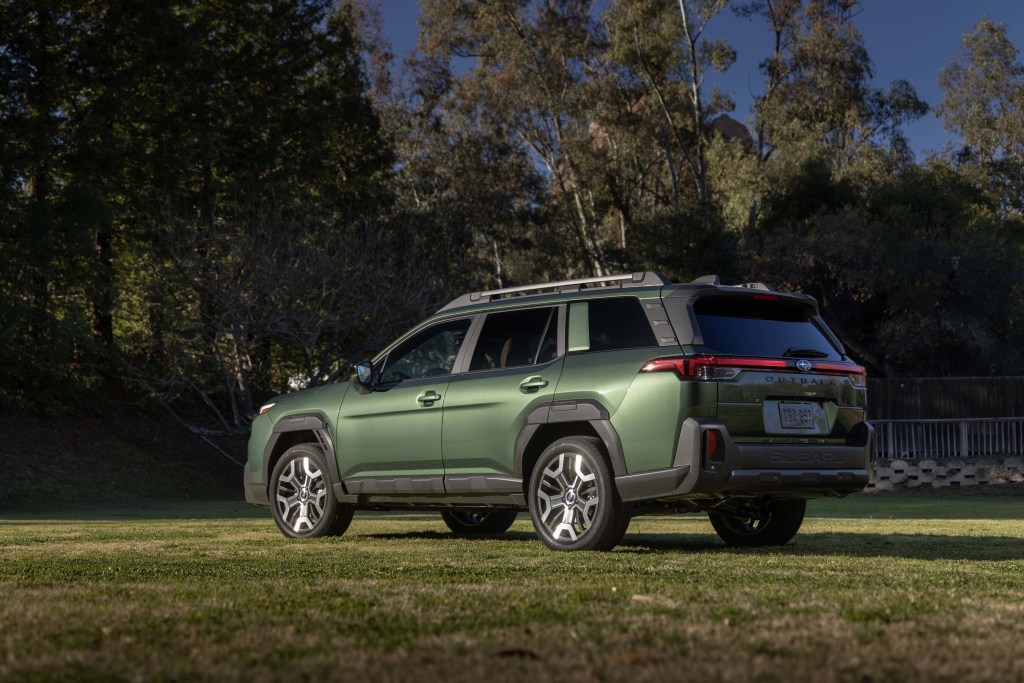
2026 Subaru Outback
Subaru said the bolder design is meant to show off the Outback’s ruggedness.
The front fascia is upright with a larger grille and new body-colour elements framing the headlights. There’s a textured lower front fascia for better scratch protection and improved aerodynamics, Subaru said.
The SUV gets the new taller roof with a flatter roofline, which increases cargo and passenger space. The roofline is 55 millimetres taller.
Ground clearance is 220 millimetres, same as before.
Cargo capacity is 980 litres, up from 923 litres.
Standard raised roof rails have a 363-kilogram static load and 100-kilogram dynamic load capacity. There are also crossbar measurement markers to help owners position accessory crossbars for an easy installation.
Subaru said a lateral load capacity rating of 100 kilograms from the sides of the crossbars allows you to hang things such as a hammock or clothesline.
On the inside, you’ll find a 12.1-inch infotainment touchscreen that is more responsive than before and a 12.3-inch digital instrument cluster. Wireless Apple CarPlay and Android Auto compatibility is standard.
Climate controls are via buttons below the touchscreen.
The screen features a hybrid navigation system that combines cloud-based and onboard information to download relevant maps.
The interior gets new low-fatigue seats that are mounted onto the chassis and lateral sway has been reduced by 42 per cent, Subaru said. The driver also gets an adjustable seat cushion that supports the legs.
The interior is quieter. Subaru said wind noise was reduced by 10 per cent thanks to aerodynamic elements in the body sides and roof rails.
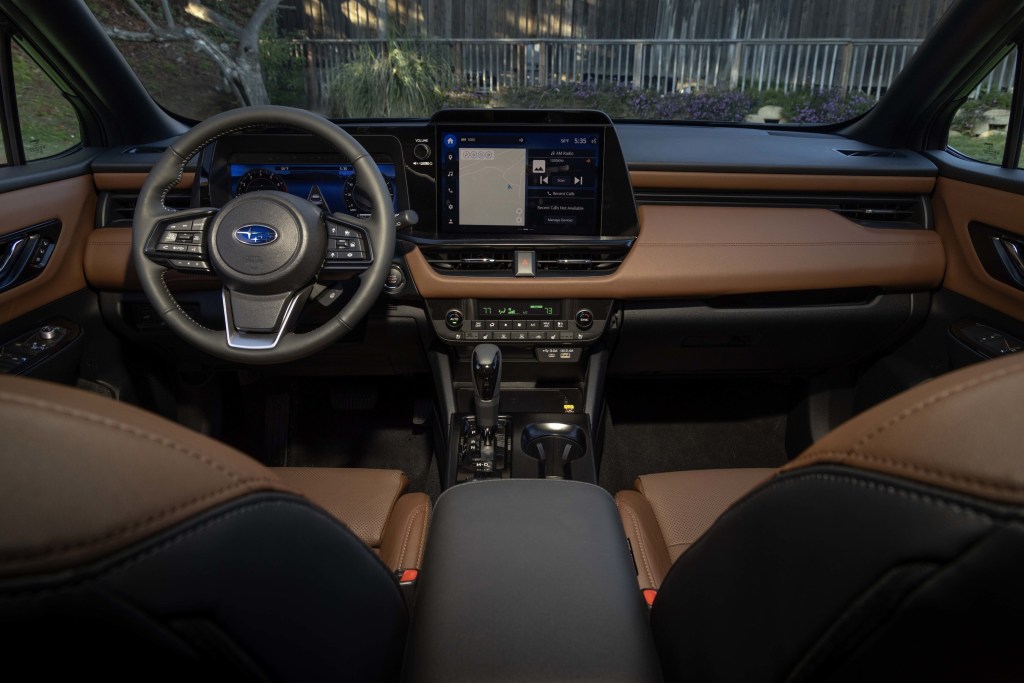
The interior is also more refined with cup holders that are said to be more accessible, larger bottle holders and improved storage spaces.
EyeSight driver assist features includes front pre-collision braking, adaptive cruise control, lane centring, lane departure warning and lane sway warning, emergency stop assist, front cross traffic braking, acceleration override assist, vibrating haptic steering wheel, and lane departure warning.
Available features include emergency stop assist with safe lane selection, pre-curve speed control, highway active lane change assist, highway automatic resume assist and driver-supported highway hands-free assist at speeds up to 135 km/h. The EyeSight system incorporates three forward-facing cameras and radar sensors.
The 2026 Outback will be available in Touring, XT Limited, Wilderness, and XT Premier trims.
It’s powered by a 2.5-litre boxer engine with 180 hp and 178 lb.-ft. of torque mated with a Lineartronic CVT with eight-speed manual shift mode. Power is sent to the wheels via Subaru’s symmetrical all-wheel-drive system.
Available on the Outback XT and exclusive to the Wilderness is a 2.4-litre turbocharged boxer engine with 260 hp and 277 lb.-ft. of torque.
Pricing was not provided. The 2026 Outback is expected to go on sale in late 2025.
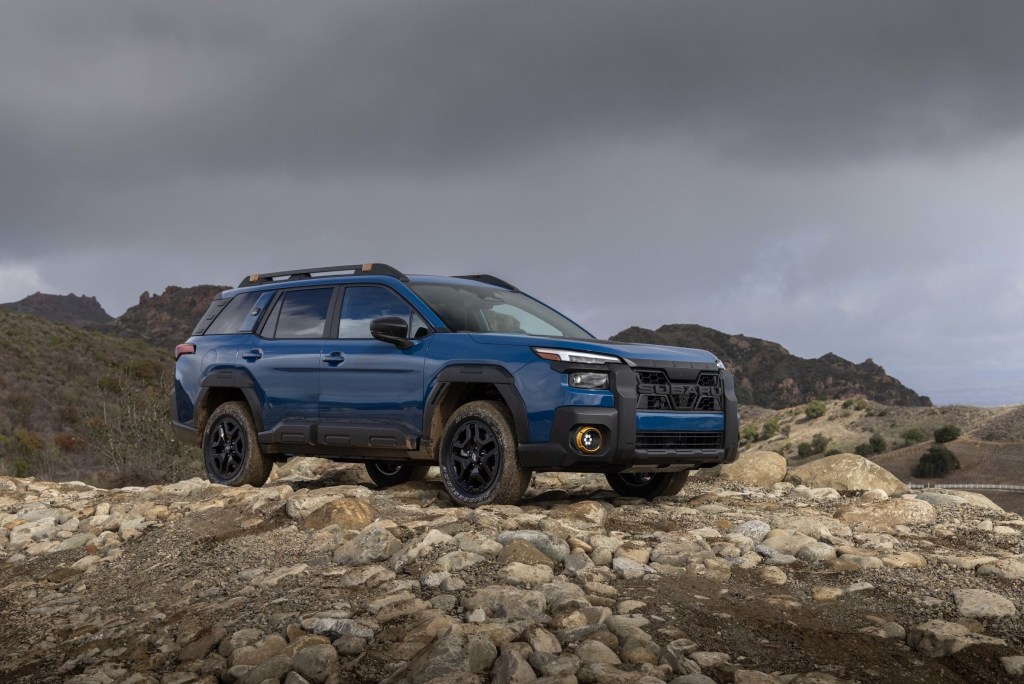
2026 Subaru Outback Wilderness
The Subaru Outback Wilderness builds on the vehicle’s off-road capability and increases it.
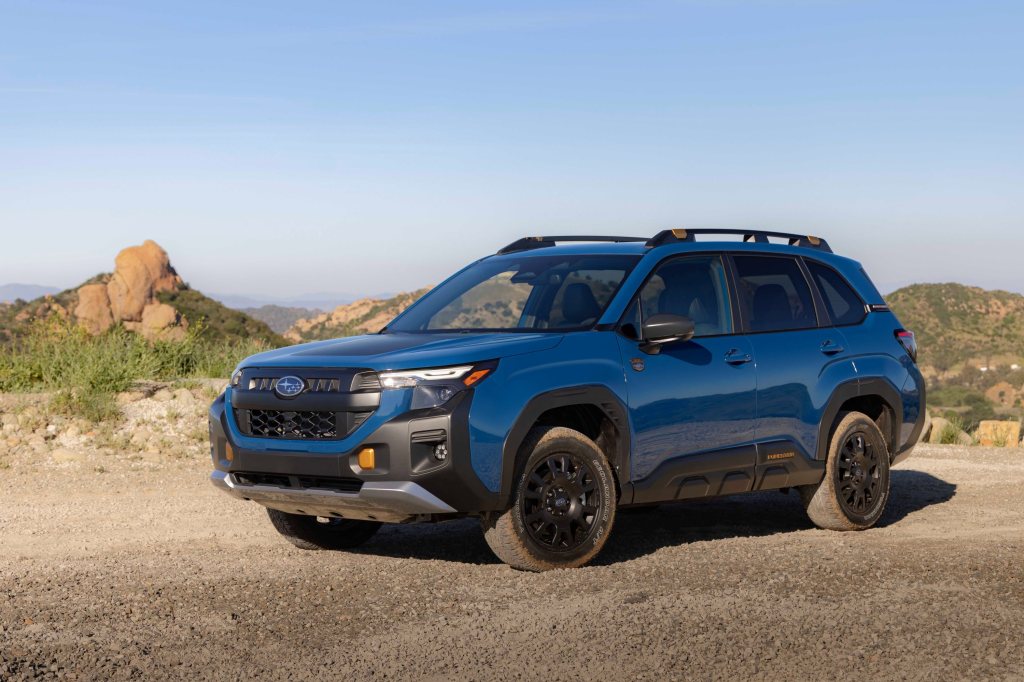
It has 241 millimetres of ground clearance and some rugged add-on exterior parts as well as unique interior elements.
The Wilderness, as mentioned above, has the stronger engine with 260 hp and gains an all-new electronically adaptive suspension with an off-road mode.
The suspension has been tuned for better stability in rough terrain, Subaru said, without losing comfort or on-road ability thanks to electronically controlled dampers.
Subaru said acceleration sensors in the electronic control unit and front suspension detect road and vehicle conditions to control the suspension’s damping in real time.

In off-road conditions, the dampers, in X-Mode, offer better security on uneven roads while maintaining comfort.
The Wilderness rides on 17-inch wheels, which are smaller than the available 19-inch wheels on other Outback models, with all-terrain tires.
These smaller wheels with more tire offer better performance in muddy and gravely roads, Subaru said.
An available accessory trailer hitch with a combined 7-pin and 4-pin connector and a reconfigured rear bumper give the SUV a towing capacity of 3,500 pounds.
The approach, departure and breakover angles are increased over the regular Outback.
The angles are as follows:
- Approach – 20 degrees (up from 18)
- Ramp breakover – 21.2 degrees (up from 19.4)
- Departure – 22.5 degrees (up from 21.4)
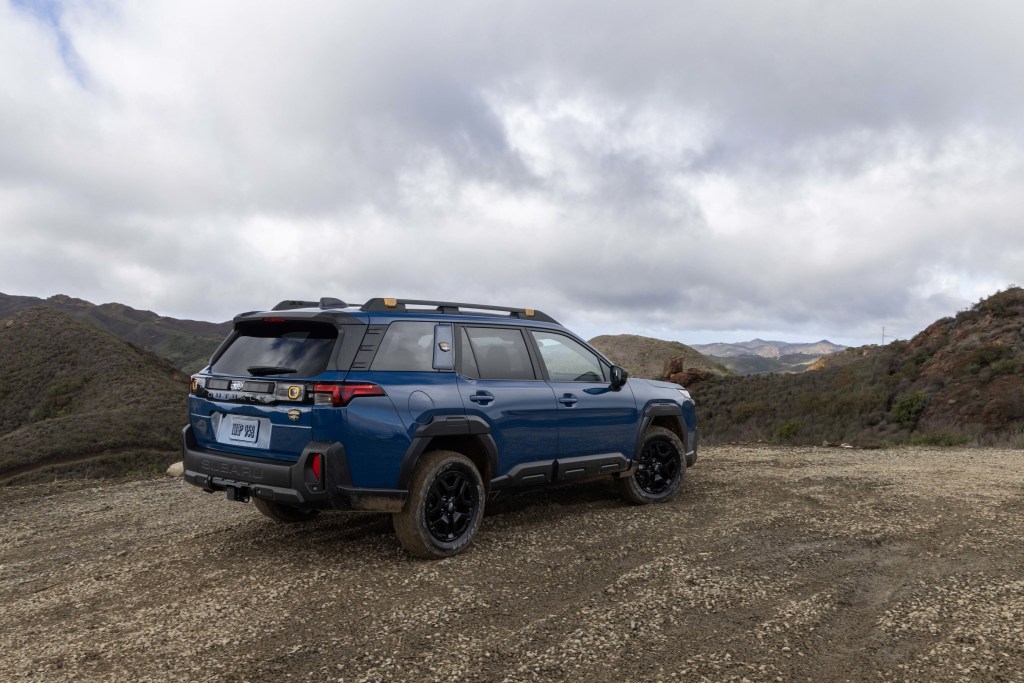
The Wilderness model includes ladder roof rails with improved rope hooks, enforced underbody protection, round LED hexagonal fog lights, matte black side mirrors, side cladding, headlamps, expanded front bumper, a unique grille and anodized copper-finish exterior accents.
On the inside, the Wilderness model gets animal-free interior seating surfaces, including water-resistant and easily cleanable soft-touch all-weather upholstery, and anodized copper-finish interior accents.
The 2026 Subaru Outback Wilderness is expected to arrive at Canadian dealerships in early 2026. Pricing will be announced closer to the launch date.
For updates, visit the Subaru Canada website.

 Empty Tank
Leave a comment