

McLaren Automotive has unveiled its successor to the F1 and P1 supercars.
The W1 mid-engine hypercar features dramatic styling and a hybrid powertrain with a total system output of 1,275 PS (1,258 hp) and 988 lb.-ft. of torque. This power output includes 928 PS (916 hp) from its 4-litre twin-turbo V8 engine, which spins to 9,200 rpm, and an electric motor with 347 PS (342 hp). Power is sent to the rear wheels via an eight-speed DCT transmission.
To compare it to its predecessors, the P1, which began production in 2013, had 916 hp, and the F1, which was produced between 1992 and 1998, had 627 hp.
The new W1 has a top speed capped at 217 mph (350 km/h), the same as the P1, while the F1 reached an official then-world-record speed of 240.1 mph (386.4 km/h) in 1998.
It shouldn’t come as a surprise that the W1 doesn’t have the same top speed as the fabled F1. The car is built to attack the track and that requires trading in top speed for things such as massive downforce to keep the car steady through the turns.
“Formula 1-derived aerodynamics, pure rear-wheel drive and McLaren hydraulic performance steering showcase McLaren’s approach to purposeful innovation as a racing company that always delivers the best possible performance. It is therefore no surprise that the new W1 is our fastest-lapping and fastest accelerating road-legal car ever. It also provides the purest driver connection by remaining true to the principles that underpin the ultimate supercar driving experience. This really is a car that only McLaren could create,” McLaren Automotive CEO Michael Leiters said in a news release.

Performance numbers
Let’s get straight to the goods, the performance numbers, as reported by McLaren.
Acceleration:
- Zero to 100 km/h – 2.7 seconds
- Zero to 200 km/h – 5.8 seconds
- Zero to 300 km/h – less than 12.7 seconds
Braking:
- 200 km/h to zero – 100 metres
- 100 km/h to zero – 29 metres
Downforce:
- Total – Limited to 1,000 kg at 280 km/h
- Front – 350 kg max
- Rear – 650 kg max
Size and weight:
The car is 4,635 mm long, rides on a wheelbase of 2,680 mm, has a height of 1,182 mm and is 2,191 mm wide (2,074 mm with mirrors folded).
The car’s dry weight is 1,399 kilograms (3,084 pounds).
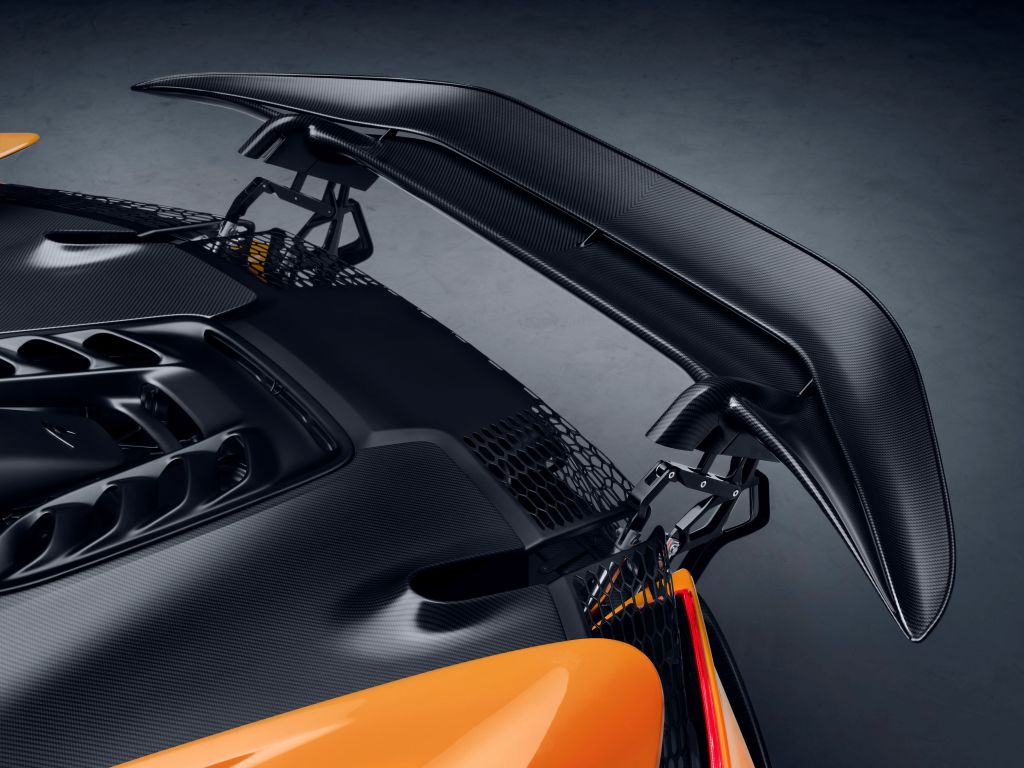
Aerodynamics
Featuring Formula 1-inspired aerodynamics, the W1 uses the most active surface areas of any McLaren and a full ground effect to make it a track-only supercar at the touch of a button, the automaker says.
The car’s Race mode makes it more track capable with stiffer spring and damping settings, and ride height lowered by 37 mm at the front and 17 mm at the rear. The lowered ride height allows the car to take full advantage of ground effect aerodynamics built right into the chassis.
Active aerodynamics include a front wing that feeds air downstream of the car up to the keep, while the outboard sections of the front wing generate front downforce.
When the driver hits the brakes, the front wing works to reduce front downforce and to protect brake cooling, McLaren says. The centre line also gets a reduction of air to further reduce downforce and shift the aero balance to the back of the car to provide braking stability.
The car’s active long tail wing can move 300 mm rearward to extend the working area of the diffuser and generate up to five times more downforce than when the car is in a road configuration.
The front wing’s performance level is said to be comparable to the rear wing on most supercars. The front area of the car also has air intakes designed to control the airflow for cooling and for an aerodynamic effect to the rear of the car.
McLaren says the rear diffuser is its most extreme in any of its road cars. It works with the active long tail wing to maximize downforce.
As for the tail wing, it is supported by a roof-mounted flow diverter that controls the air to the air of the car and keeps it connected to the rear deck and wing, which allows the tail wing to work at a lower height, helping to reduce drag.
The front and rear wings adjust according to the driver’s steering, accelerating and braking and the vehicle’s speed. For example, when the car is accelerating in a straight line. In cornering, both wings set the optimal position to balance downforce according to the car speed, McLaren says.
“The McLaren W1 is the perfect execution of a bold and ambitious aerodynamic philosophy that delivers impressive lap times through not only high downforce but optimal aerodynamic behaviour and active control,” said Robin Algoo, principal aerodynamics engineer, in the release. “The all-integral aerodynamic platform with the Aerocell as the centrepiece enables fully underbody ground effect in Race mode. Inherently efficient, W1 deploys staggering level of downforce for relatively little drag. Thanks to numerous innovations, we have succeeded in incorporating elegantly F1-inspired vortical flow field to an uncompromised road car.”
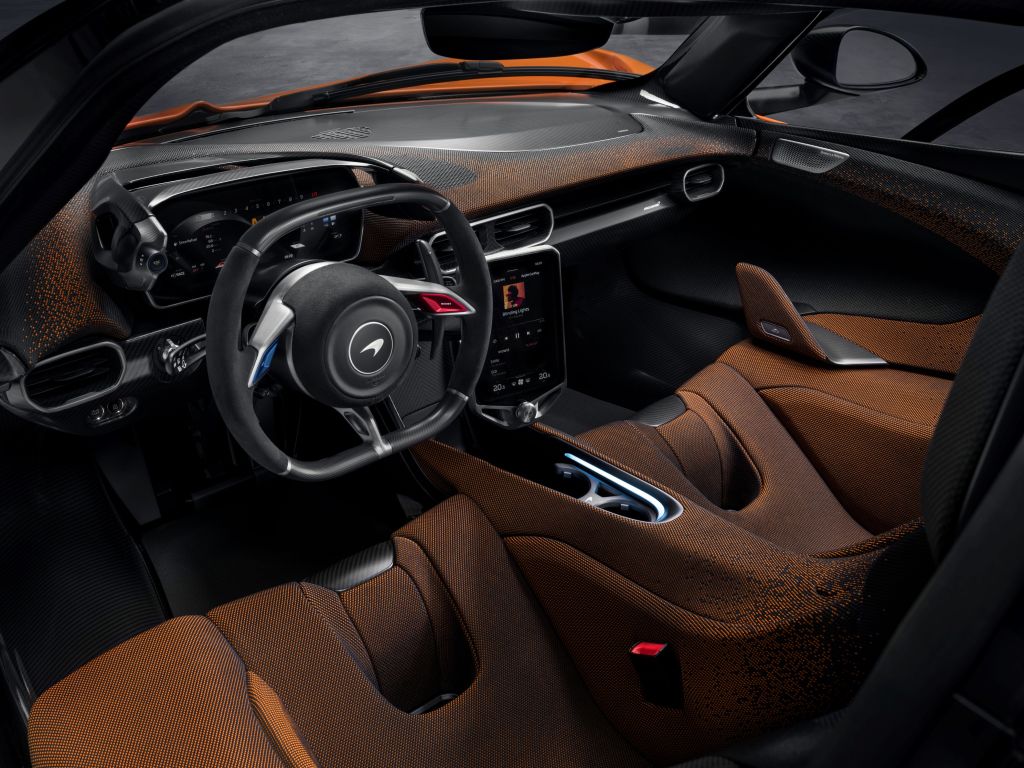
The McLaren W1 has a starting price of £2 million ($3.6 million Canadian), but the final price will depend on the level of customization the purchaser opts for.
Only 399 W1 cars will be produced and they’re all already spoken for.
More details are available on the McLaren website.
 Empty Tank
Leave a comment