
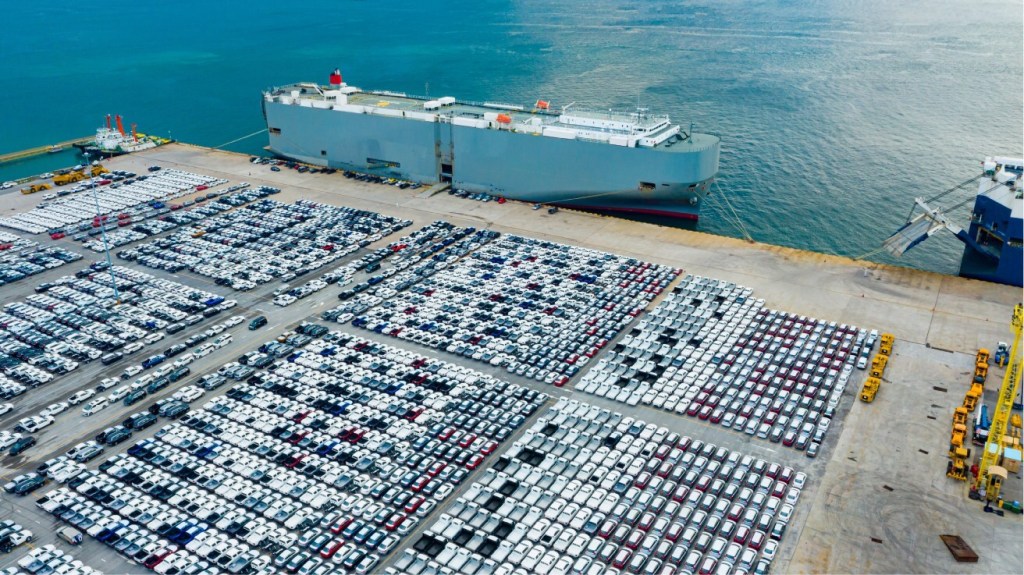
The Government of Canada has announced it plans to implement a 100 per cent surtax on all Chinese-made electric vehicles.
The additional measure would be on top of a 6.1 per cent import tariff that already exists on EVs imported from China to Canada.
This includes electric and certain hybrid automobiles, trucks, buses, and delivery vans.
The Chinese EV tariffs are expected to begin on Oct. 1.
Additionally, the government intends to apply a 25 per cent surtax on imports of steel and aluminum products from China, which would begin Oct. 15.
The surtaxes won’t apply to products already in transit to Canada on the day they come into effect.
The Canadian government also intends to only provide zero-emission vehicle rebates on vehicles made in countries which have negotiated free trade agreements with Canada (as in, not China).
The government hasn’t ruled out further measures, and will conduct a 30-day consultation period related to other items, including batteries, battery parts, semiconductors, solar products, and critical minerals.
Canada’s government stated these measures are intended to protect auto manufacturing industry jobs, which total more than 125,000 direct jobs, and Canada’s steel and aluminum sector jobs, which total more than 130,000 direct jobs.
“Canada is home to the talented workers, raw materials, clean electricity, and specialized production capabilities needed to build electric vehicles, and that is why our EV supply chain potential is ranked first in the world,” said Deputy Prime Minister and Minister of Finance Chrystia Freeland in a news release. “Canadian workers and critical sectors, including steel and aluminum, however, are facing an intentional, state-directed policy of overcapacity, undermining the Canada’s ability to compete in domestic and global markets. That is why our government is moving forward with decisive action to level the playing field, protect Canadian workers, and match measures taken by key trading partners.”
Unifor, Canada’s largest private sector union, which represents more than 40,000 automotive industry workers, welcomed the measures.
“A flood of low-cost EV imports from China would undermine everything being done to rebuild and grow a strong and truly national automotive sector, one that competes on the world stage. Measures to address unfair trade advantages, obtained through improper and illicit practices, are overdue,” said Unifor national president Lana Payne in a news release. “We will not allow Chinese automakers to undermine Canadian workers and the development of an advanced, future-facing auto industry with the good union jobs and economic benefits it will bring to our communities. Our members have worked very hard to get here and make no mistake we will not go back.”
 Empty Tank
Leave a comment