
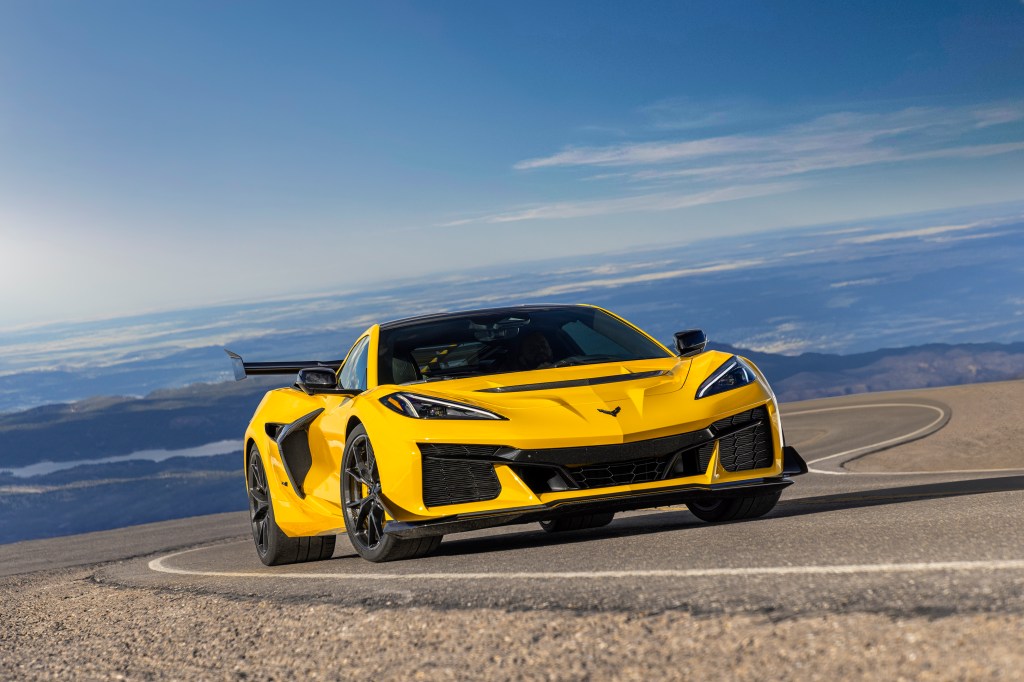
It appears Chevrolet is putting the Italian supercar makers on notice with the fastest and most-powerful Corvette ever.
The 2025 Chevrolet Corvette ZR1 was unveiled July 25 and the numbers are mind-boggling.
Here are the numbers, as reported by Chevrolet:
- Horsepower: 1,064 at 7,000 rpm
- Torque: 828 lb.-ft. at 6,000 rpm
- Top speed: 346 km/h (215 mph)
- Downforce: 1,200 pounds at top speed with carbon fibre aero package
Chevrolet estimates the car will do the quarter-mile in less than 10 seconds.
The car is available in coupe or convertible form.
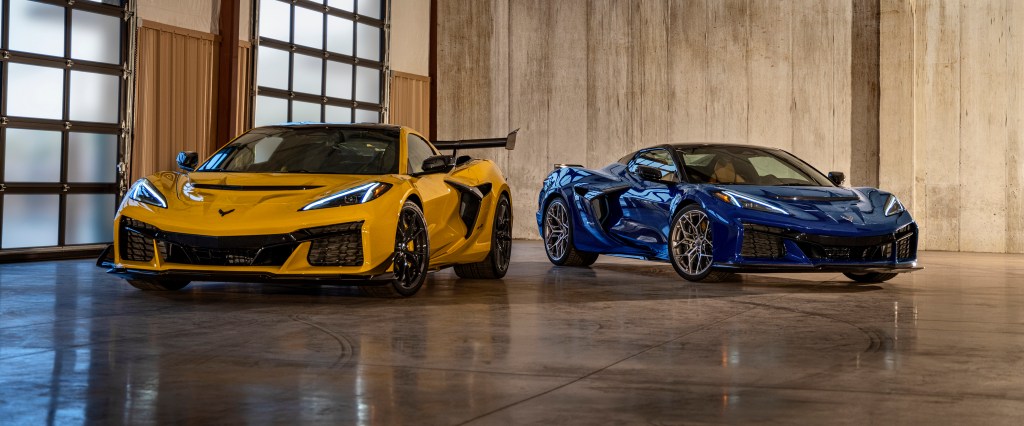
“The team that revolutionized Corvette with a mid-engine architecture took on another challenge: take ZR1 to the next level,” said Scott Bell, vice president, Chevrolet, in a news release. “Corvette ZR1 is about pushing the envelope with raw power and cutting-edge innovation. From Stingray, to Z06, E-Ray, and now ZR1, the Corvette family continues to elevate with each new iteration – and challenge the best in the world.”
Engine
The ZR1 is powered by an engine that shares the same architecture with the Z06’s LT6, but in this version it’s called the LT7. It’s a small block 5.5-litre, twin-turbo DOHC flat-plane crank V8.
When the LT6 program was launching, engineers had two goals: to create massive power, capability and character from a naturally aspirated engine as well as a turbocharged one. As a result, the non-turbo LT6 is the most powerful naturally aspirated production V8 engine. Add the twin turbos and you’ve got asphalt-shredding power.
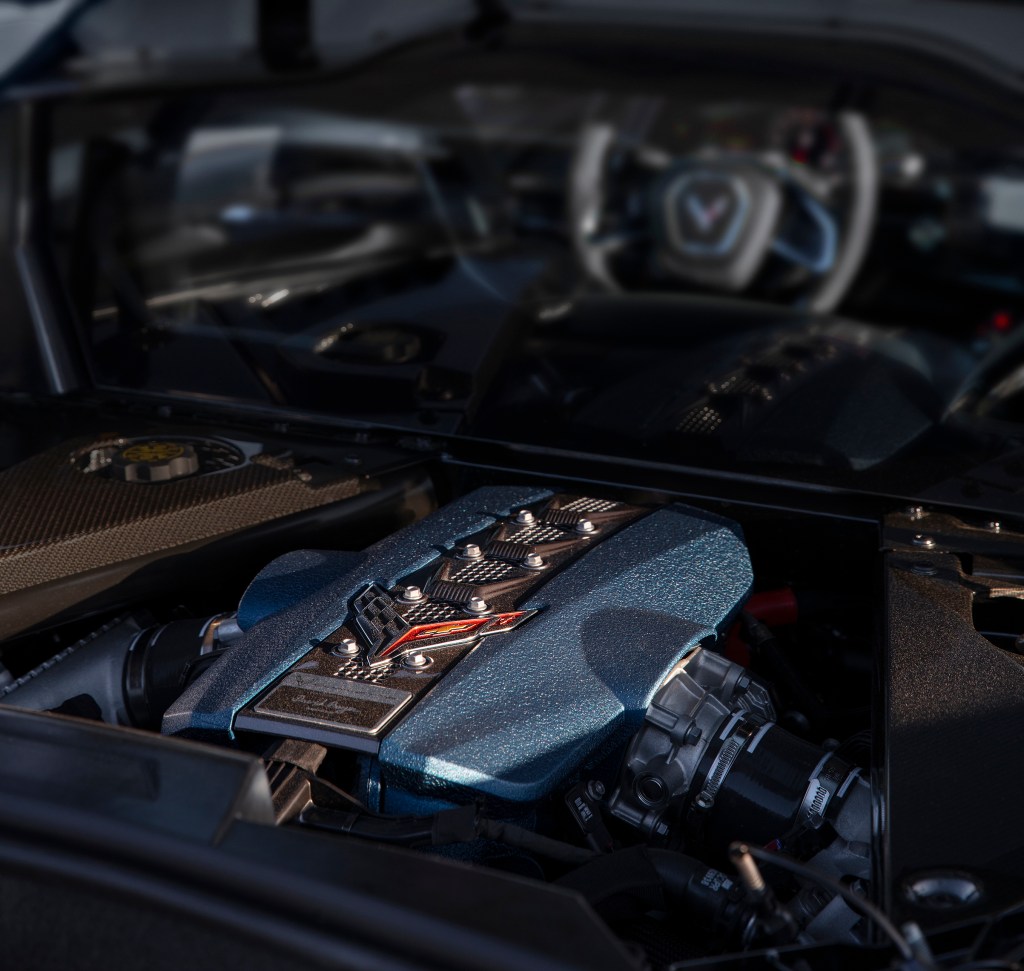
Chevrolet says the LT7 engine is purpose-built for its massive power without compromises in componentry and remains rev-happy. It will be hand-assembled at the Performance Build Center, part of the Bowling Green Assembly Plant in Kentucky.
Power is sent to the rear wheels via an eight-speed dual-clutch automatic transmission, which was upgraded for the ZR1.
Aerodynamics
The ZR1 also has the most downforce of any Corvette. The standard ZR1 chassis features a sleeker body with lower drag and a small spoiler with customer-adjustable short and tall wickers. There’s also a carbon-fibre front splitter, rocker moldings, side intake with integrated brake cooling, and a front underwing with stall gurney deflectors.
Wheels measure 20 inches in the front and 21 in the rear, wearing Michelin Pilot Sport 4S tires.
Then there’s the optional ZTK performance package, which Chevrolet says makes the Corvette a true track weapon. The package includes an aggressive high-downforce rear wing, front dive planes and a tall hood gurney lip. These are made of woven carbon fibre. Furthermore, underbody strakes replace the standard front underwing stall gurney to increase front downforce. The suspension tuning gets stiffer springs and the tires are swapped out for Michelin Pilot Sport Cup 2 R rollers.
A Carbon Aero package, featuring all aerodynamic equipment from the ZTK package is also available on the standard ZR1.
“We went into the ZR1 program with lofty goals, but even our first development tests on-track showed the teams were already exceeding them,” said Tadge Juechter, executive chief engineer, Corvette, in the release. “As we worked to develop this car, we continued to leap past expectations, and we knew we had a special Corvette on our hands.”
Chevrolet says the ZR1 accelerates from 128 to 321 km/h (80 to 200 mph) and back to 128 km/h 22 per cent quicker than the last generation (C7) ZR1, and 53 per cent quicker than the generation before (C6).
The dry weight is listed as 1,665 kilograms (3,670 pounds) on the coupe and 1,705 kilograms (3,758 pounds) on the convertible.
Design

The split rear window is also back.
“Not only does this element provide function, but we were able to integrate passionate design into the form and do it in a way that paid homage to Corvette’s history. ZR1 felt like the right time to bring the split-window back,” said Phil Zak, executive design director, Chevrolet, in the release.
Chevrolet said the carbon-fibre “spine” between the two rear windows provides increased heat extraction from the engine compartment, which works in conjunction with other cooling elements throughout the car.
Other components that are different over the non-ZR1 models include a carbon-fibre roof, which reduces weight and lowers the centre of gravity on both the coupe and convertible, a unique aluminum wheel design as well as an optional new carbon-fibre wheel design that is exclusive to the ZR1 and further reduces mass, and an engine intake that is finished in Edge Blue.

The ZR1 will enter production in 2025 and will be built at the Bowling Green assembly plant, the same place that builds the Stingray, Z06 and E-Ray.
The price will be announced closer to production.
 Empty Tank
Leave a comment